Testing SARMs: Purity, Adulteration and Assay Design
Research compounds for laboratory use only · not medical advice
By Vyroval Research Desk — an institutional byline. PubMed-linked sources are checked against their indexed records; how this desk works.
Chemical purity is not receptor activity, and a label is not an identity. How SARM reference materials are actually verified — methods, common adulterants and the questions to ask.
Two different questions
Every question about a SARM reference material is really two questions that get conflated. The first is analytical: is the powder in the vial the compound on the label, and how pure is it? The second is pharmacological: does this material produce the receptor behaviour the study assumes? A sample can pass the first and fail the second — a racemate of a compound whose activity sits in one enantiomer is analytically clean and pharmacologically different from the resolved standard.
Keeping the two apart is the whole discipline of reference-standard work, and it is where most procurement goes wrong.
Why SARM supply fails identity testing
The best-known dataset on this is a 2017 analysis of 44 products sold as SARMs. Fewer than half contained the compound named on the label. Many contained a different SARM than the one advertised; some contained no SARM at all. Ostarine in particular appeared as an adulterant across products purporting to be other compounds, which is consistent with its position as the cheapest and most available member of the series.
The lesson is not that SARM analysis is difficult — the methods are routine. The lesson is that an unregulated supply chain produces mislabelling at a rate that makes label-based identity worthless, and that a laboratory which accepts a vendor label as an identity claim has skipped the only step that matters.
Identity: what a defensible package contains
Retention-time matching against a certified reference standard is necessary and not sufficient, because retention time is a single scalar and several compounds in this series are close analogues. Mass confirmation through a stated transition set adds the molecular identity dimension; high-resolution mass spectrometry adds the elemental composition check. Where the compound contains a distinctive heteroatom — the CF₃ group in ostarine and andarine, the chlorine in RAD-140, the sulfur and chlorine in SR-9009 — isotope patterns and ¹⁹F NMR become fast independent checks that do not depend on a chromatographic method.
Purity, and the number that hides behind it
“99% by HPLC” is a claim about one wavelength on one column. Purity measured at 220 nm and at 254 nm differ for compounds whose chromophores absorb unequally across that range, and a method that reports neither the wavelength nor the integration parameters is not reproducible from the certificate alone.
Three measured values belong next to each other in any serious certificate: achiral purity by peak area, chiral composition where a stereocentre exists, and residual organic solvent where the synthesis route implies one. The LGD-4033 reference notes the same structural gap from the compound side — a percentage without enantiomeric context describes a mixture.
Assay design: receptor work is not a purity test
An androgen-receptor binding or transactivation assay measures activity, and activity is a function of the specific ligand, the salt form, the vehicle and the incubation conditions. A reference standard that is 97% pure but fully resolved can outperform a 99% racemate in reproducing published values. When designing the assay, fix the material first: same lot, same stock concentration, same vehicle across every arm, with an independent positive control whose expected response is known.
The class-level discussion of selectivity claims, and where the published evidence is thin, is in the SARMs research compounds guide and the hub page. Documentation practice across the catalog is described on the quality assurance page.
Practical protocol sketch
| Step | Measurement | Failure it catches |
|---|---|---|
| 1. Weigh | Balance, pre-dried vessel | Hygroscopic mass error |
| 2. Identity | Retention + LC-MS/MS transitions | Wrong compound, analogue substitution |
| 3. Orthogonal identity | ¹⁹F NMR or isotope pattern | Co-eluting isobaric adulterant |
| 4. Achiral purity | HPLC-UV, wavelength stated | Degradants, synthesis by-products |
| 5. Chiral purity | Chiral column, ratio reported | Racemate sold as resolved standard |
| 6. Stock check | UV absorbance at λmax | Weighing or dissolution error |
Each row exists because a specific failure mode has been observed in commercial material. A vendor that cannot supply rows 2–5 in writing is not providing a reference standard; it is providing an unverified powder with a name on it.
Research use only. Not for human consumption.
FAQ
Frequently asked questions
Why do SARM products fail identity testing?
An analysis of 44 products sold as SARMs found that fewer than half contained the compound named on the label; many contained different SARMs, and some contained non-SARM active ingredients. Unregulated supply is the root cause, not analytical difficulty.
What is the minimum identity package for a SARM standard?
Retention matching against a certified reference standard, an independent mass confirmation with the transition set stated, and — where a stereocentre exists — a chiral method with the enantiomeric ratio reported.
Does HPLC purity predict receptor activity?
No. Purity measures chemical cleanliness of the sample; activity depends on the specific enantiomer, the salt form and the assay conditions. A 99% racemate can bind differently from a 97% single enantiomer.
How should SARM stocks be prepared for assay work?
Weigh into a pre-dried vessel, dissolve in DMSO or ethanol at a concentration well above the final working dilution, aliquot to avoid freeze-thaw, and confirm the stock concentration spectrophotometrically where an extinction coefficient exists.
What should a certificate of analysis contain?
Batch identity, analysis date, method for each measurement, purity with the detection wavelength, mass confirmation with the ion transitions, chiral composition where applicable, and the storage condition the data were generated under.
References
Selected literature for the compounds discussed
These papers are background literature on the compounds referenced above — they are not citations of this article.
- [1]Palmieri C., et al. "Activity and safety of enobosarm, a novel, oral, selective androgen receptor modulator, in androgen receptor-positive, oestrogen receptor-positive, and HER2-negative advanced breast cancer (Study G200802): a randomised, open-label, multicentre, multinational, parallel design, phase 2 trial." Lancet Oncol, 2024.
- [2]Crawford J., et al. "Study Design and Rationale for the Phase 3 Clinical Development Program of Enobosarm, a Selective Androgen Receptor Modulator, for the Prevention and Treatment of Muscle Wasting in Cancer Patients (POWER Trials)." Curr Oncol Rep, 2016.
- [3]Brown A.M., et al. "RAD140 (Testolone) negatively impacts skeletal muscle adaptation, frailty status and mortality risk in female mice." Clin Exp Pharmacol Physiol, 2023.
- [4]Yu Z., et al. "Selective Androgen Receptor Modulator RAD140 Inhibits the Growth of Androgen/Estrogen Receptor-Positive Breast Cancer Models with a Distinct Mechanism of Action." Clin Cancer Res, 2017.
- [5]Basaria S., et al. "The safety, pharmacokinetics, and effects of LGD-4033, a novel nonsteroidal oral, selective androgen receptor modulator, in healthy young men." J Gerontol A Biol Sci Med Sci, 2013.
- [6]Yavuz M., et al. "Exploring the potentials of S4, a selective androgen receptor modulator, in glioblastoma multiforme therapy." Toxicol Appl Pharmacol, 2024.
Keep reading
Related articles
Andarine (S-4): The First-Generation SARM Standard
Andarine is the molecule that defined the SARM template — and the one whose retinal off-target findings defined the limits of the selectivity claim. Chemistry, detection and handling.
Ostarine (MK-2866): The Prototype SARM, Revisited
Enobosarm is the most studied SARM in the catalog: phase II human data, a single stereocentre that decides what the standard actually is, and a documentation trail worth reading before any assay.
Importing Research Peptides: Documents, Alerts and Holds
What actually decides an import: entry data, import alerts and DWPE, recall history, and how to verify a supplier's claims against FDA's own records. Not legal advice.
Laboratory tools
Put it into practice
From the catalog
Reference compounds
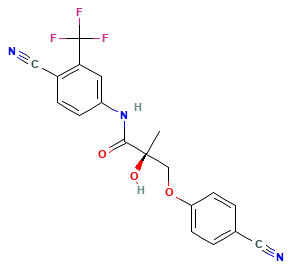
Ostarine (Enobosarm)
Aryl-propionamide SARM reference standard. GTx's phase II compound.
CAS 841205-47-8
Ships in 3–5 days10mg vial · In stock
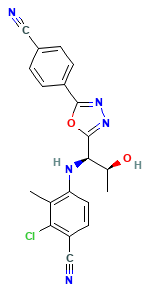
Testolone (RAD-140)
High-affinity benzyl-propionamide SARM from Ligand's preclinical series.
CAS 1182367-47-0
Ships in 3–5 days10mg vial · In stock
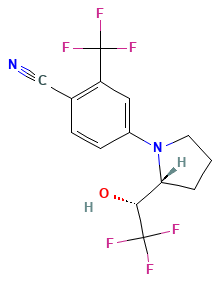
Ligandrol (LGD-4033)
Fluorophenyl oxadiazole-class SARM studied in bone-mass protocols.
CAS 1165910-22-4
Ships in 3–5 days10mg vial · In stock
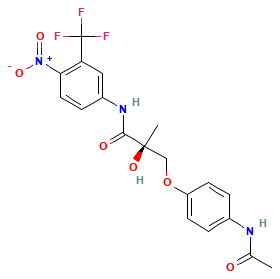
Andarine (S-4)
Nitrophenoxy-acetamide prototype from Ligand's original SARM series.
CAS 401900-40-1
Ships in 3–5 days10mg vial · In stock
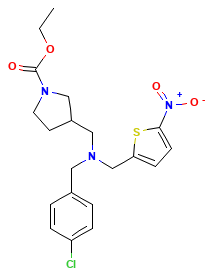
SR-9009 (Stenabolic)
REV-ERB agonist often shelved with SARMs — mechanism is distinct.
CAS 1379686-30-2
Ships in 3–5 days10mg vial · In stock
For laboratory research use only