3 compounds · Catalog
GLP-1 Agonists
The incretin category holds three compounds: semaglutide, a GLP-1 receptor agonist with a fatty-acid side chain; tirzepatide, a dual GIP/GLP-1 receptor agonist; and retatrutide, a triple GLP-1/GIP/glucagon receptor agonist. All three are long-acting by design, and the engineering that produces that duration is the interesting part of each molecule.
Albumin binding is the shared mechanism. A C16 or C18 fatty diacid attached through a linker lets the peptide associate with serum albumin, which slows renal clearance and proteolytic attack without requiring a larger molecule. Differences in linker chemistry and receptor selectivity explain why the three compounds sit at different dosing intervals in the clinical literature, even though all are supplied here as research materials.
Compounds in GLP-1 Agonists
Retatrutide
Triple-agonist (GIP/GLP-1/Glucagon). Lyophilized, mass-spec verified.
CAS 2381089-83-2
Ships in 3–5 days10mg vial · In stock
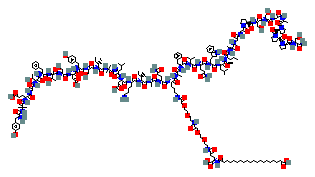
Tirzepatide
Dual GIP/GLP-1 agonist. Research grade.
CAS 2023788-19-2
Ships in 3–5 days10mg vial · In stock
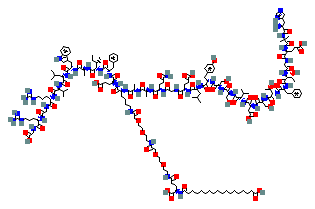
Semaglutide
GLP-1 receptor agonist. Reference standard.
CAS 910463-68-2
Ships in 3–5 days5mg vial · In stock
What the documentation covers
Purity by HPLC is reported per batch, with mass confirmation by LC-MS. Because these are large, lipophilic peptides, solubility behaviour at reconstitution matters: the fatty-acid chain makes the molecule slower to wet out than a plain lyophilized peptide, and the product page for each compound states the recommended solvent and the concentration range that stays in solution.
Storage guidance follows from the same property. The lyophilized powder is stable at controlled room temperature for the labelled period; once reconstituted, the working solution is refrigerated and used within the window stated on the page. Light exposure is worth avoiding for all three because the tryptophan residue in the GLP-1 sequence is a known photo-oxidation site.
Comparing the three
The journal compares semaglutide and retatrutide on receptor selectivity and reported half-life, and tirzepatide against the other two on the GIP component. Those pages are the right place to compare; the catalog pages stay on identity, handling and documentation, because a product listing that argues mechanism tends to drift into claims a research-supply listing should not make.
Regulatory status differs across jurisdictions and changes over time. Retatrutide in particular has no approved human formulation anywhere, and that fact is stated plainly on its page rather than implied by omission. All three are supplied for laboratory research only.
Other categories
All compounds in this category are supplied for laboratory research use only — not for human or veterinary application. Certificate of analysis, CAS number and handling data are provided per batch; see quality assurance.