Semaglutide vs Retatrutide: GLP-1 Selective vs Triple Agonist
Research compounds for laboratory use only · not medical advice
Selective GLP-1 agonism versus triple GIP/GLP-1/glucagon agonism — how semaglutide and retatrutide differ in mechanism, molecular size and research use.
Semaglutide and retatrutide are often grouped as “GLP-1 peptides,” but they sit at opposite ends of the incretin-agonist spectrum: semaglutide is a selective GLP-1 receptor agonist, and retatrutide is a triple agonist activating GIP, GLP-1 and glucagon receptors.
Side by side
| Property | Semaglutide | Retatrutide |
|---|---|---|
| Receptor target | GLP-1 only | GIP + GLP-1 + glucagon |
| Class | Selective agonist | Triple agonist |
| CAS | 910463-68-2 | 2381089-83-2 |
| Molecular formula | C187H291N45O59 | C221H342N46O68 |
| Molecular weight | 4113.6 g/mol | 4757.7 g/mol |
| Structural anchor | Aib-8 + C18 fatty acid | C20 fatty diacid (albumin-binding) |
| Vial size | 5 mg | 10 mg |
| Purity | 99.4% | 99.5% |
Mechanism differences
- Semaglutide isolates the GLP-1 pathway: appetite signaling, insulin secretion, slowed gastric emptying. Its Aib-8 substitution resists DPP-4, and the C18 chain binds albumin for a long half-life.
- Retatrutide adds GIP agonism (incretin + fat-tissue signaling, like tirzepatide) and glucagon agonism (energy expenditure via thermogenesis and lipid oxidation) on top of GLP-1.
In research, semaglutide is the clean control for GLP-1-specific effects; retatrutide is the reference compound for studying the additive energy-expenditure arm.
Trial context
Semaglutide has an extensive published evidence base (STEP/SUSTAIN programs). Retatrutide’s phase 2 data showed dose-dependent weight reduction, with the largest effects at 8-12 mg weekly, and it has advanced into the phase 3 TRIUMPH program.
Vial math comparison
Both are lyophilized research peptides stored at -20°C and reconstituted with bacteriostatic water:
- Semaglutide 5 mg + 1 mL water = 5 mg/mL stock
- Retatrutide 10 mg + 2 mL water = 5 mg/mL stock
Use the reconstitution calculator for any target dose. Also compare: semaglutide vs tirzepatide and retatrutide vs tirzepatide.
Last updated September 9, 2026
FAQ
Frequently asked questions
What is the main difference between semaglutide and retatrutide?
Semaglutide is a selective GLP-1 agonist; retatrutide is a triple agonist that also activates GIP and glucagon receptors.
Are semaglutide and retatrutide the same size?
No — semaglutide is 4113.6 g/mol (C187H291N45O59); retatrutide is 4757.7 g/mol (C221H342N46O68).
Which one is the triple agonist?
Retatrutide (LY3437943) — it targets GIP, GLP-1 and glucagon receptors simultaneously.
Which vial sizes are available for research?
Semaglutide ships as a 5 mg lyophilized vial; retatrutide as a 10 mg vial (10 vials per box).
Keep reading
Related articles
Retatrutide Dosage and Reconstitution Math: 10 mg Vial in the Lab
Retatrutide (RT) vial math — reconstituting a 10 mg lyophilized vial, converting mg to mL and U-100 units, and the common research dose ranges.
Semaglutide Mechanism of Action: GLP-1 Receptor Agonism in Research
How semaglutide's GLP-1 receptor agonism, Aib-8 stabilization and C18 fatty-acid chain make it the reference standard for GLP-1 research.
Tirzepatide Mechanism of Action: Dual GIP/GLP-1 Agonism in Research
How tirzepatide's dual GIP/GLP-1 receptor agonism and C20 fatty-diacid tail make it the reference 'twincretin' in metabolic research.
Laboratory tools
Put it into practice
From the catalog
Reference compounds
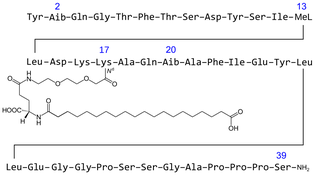
Retatrutide
Triple-agonist (GIP/GLP-1/Glucagon). Lyophilized, mass-spec verified.
CAS 2381089-83-2
10mg vial · In stock
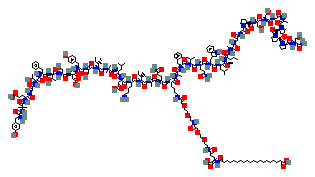
Tirzepatide
Dual GIP/GLP-1 agonist. Research grade.
CAS 2023788-19-2
10mg vial · In stock
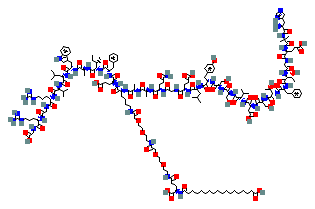
Semaglutide
GLP-1 receptor agonist. Reference standard.
CAS 910463-68-2
5mg vial · In stock
HGH 191aa
Recombinant human growth hormone. Full 191aa sequence.
CAS 12629-01-5
10IU vial · In stock
For laboratory research use only