Retatrutide Dosage and Reconstitution Math: 10 mg Vial in the Lab
Research compounds for laboratory use only · not medical advice
Retatrutide (RT) vial math — reconstituting a 10 mg lyophilized vial, converting mg to mL and U-100 units, and the common research dose ranges.
Retatrutide ships as a lyophilized research peptide in a 10 mg vial (10 vials per box). The vial math is straightforward once you decide on a stock concentration — and it is identical to the math for any 10 mg peptide.
Reconstitution table
| Water added | Stock concentration | 250 mcg | 500 mcg | 1 mg |
|---|---|---|---|---|
| 1 mL | 10 mg/mL | 25 µL (5 units) | 50 µL (10 units) | 100 µL (20 units) |
| 2 mL | 5 mg/mL | 50 µL (10 units) | 100 µL (20 units) | 200 µL (40 units) |
| 3 mL | 3.33 mg/mL | 75 µL (15 units) | 150 µL (30 units) | 300 µL (60 units) |
Use bacteriostatic water (0.9% benzyl alcohol) for multi-draw research use. Roll the vial to dissolve; retatrutide is soluble in water and dilute acetic acid. Do not shake — lyophilized peptides foam and can shear.
Dose ranges in the research literature
The published phase 2 program (2023) evaluated once-weekly retatrutide across 1, 4, 8 and 12 mg arms over 48 weeks. Weight reduction was dose-dependent, with the 8 mg and 12 mg arms reporting the largest mean reductions. The triple-agonist profile (GIP/GLP-1/glucagon) is the proposed mechanism: incretin-driven appetite suppression plus glucagon-driven energy expenditure.
For in vitro and preclinical work, retatrutide is typically used at concentrations defined by the assay rather than a fixed schedule — reconstitute to a convenient stock and dilute per experiment.
10 mg vial — the reference numbers
- CAS 2381089-83-2 · C221H342N46O68 · MW 4757.7
- Purity ≥99.5% (HPLC-MS), lyophilized, -20°C storage
- Pack: 10 mg vial, 10 vials/box
Use the reconstitution calculator for any water volume and target dose, and the molecular weight calculator when converting molar concentrations. Compare with tirzepatide 10 mg (dual agonist) and semaglutide 5 mg (GLP-1 selective) — different molecules, same vial math.
Last updated September 9, 2026
FAQ
Frequently asked questions
How do I reconstitute a 10 mg retatrutide vial?
Add 2 mL of bacteriostatic water to the 10 mg lyophilized vial for a 5 mg/mL stock, or 1 mL for 10 mg/mL. Roll gently — do not shake — and let it dissolve.
What are common research dose ranges for retatrutide?
In the phase 2 program, doses from 1 mg to 12 mg weekly were evaluated; the 4 mg, 8 mg and 12 mg arms showed the largest weight reductions.
How many units is 250 mcg from a 5 mg/mL stock?
5 mg/mL = 5 mcg per µL, so 250 mcg = 50 µL = 10 units on a U-100 insulin syringe.
How should reconstituted retatrutide be stored?
Lyophilized powder at -20°C; reconstituted solution in the refrigerator and used within the bacteriostatic water's multi-use window.
Keep reading
Related articles
BPC-157 Dosage and Reconstitution Math: 5 mg Vial in the Lab
BPC-157 vial math — reconstituting a 5 mg lyophilized vial, mg to mL and U-100 unit conversions, and common research dose ranges.
GHK-Cu Reconstitution and Vial Math: 50 mg Copper Peptide in the Lab
GHK-Cu (CU50) vial math — reconstituting a 50 mg copper tripeptide vial, mg to mL conversions, and the concentrations used in cell-culture work.
Semaglutide Mechanism of Action: GLP-1 Receptor Agonism in Research
How semaglutide's GLP-1 receptor agonism, Aib-8 stabilization and C18 fatty-acid chain make it the reference standard for GLP-1 research.
Laboratory tools
Put it into practice
From the catalog
Reference compounds
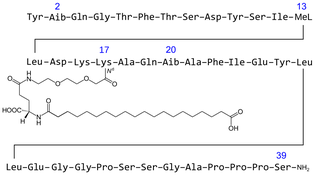
Retatrutide
Triple-agonist (GIP/GLP-1/Glucagon). Lyophilized, mass-spec verified.
CAS 2381089-83-2
10mg vial · In stock
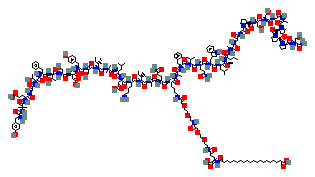
Tirzepatide
Dual GIP/GLP-1 agonist. Research grade.
CAS 2023788-19-2
10mg vial · In stock
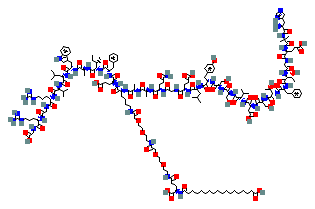
Semaglutide
GLP-1 receptor agonist. Reference standard.
CAS 910463-68-2
5mg vial · In stock
HGH 191aa
Recombinant human growth hormone. Full 191aa sequence.
CAS 12629-01-5
10IU vial · In stock
For laboratory research use only