Semaglutide Mechanism of Action: GLP-1 Receptor Agonism in Research
Research compounds for laboratory use only · not medical advice
How semaglutide's GLP-1 receptor agonism, Aib-8 stabilization and C18 fatty-acid chain make it the reference standard for GLP-1 research.
Semaglutide is a selective GLP-1 receptor agonist and the reference standard in the incretin research class. Its 94% sequence homology to native human GLP-1, combined with two structural modifications, is what makes it a workhorse compound in metabolic laboratories.
The two structural modifications
| Modification | Effect |
|---|---|
| Aib substitution at position 8 | Resists DPP-4 cleavage → longer activity in assays |
| C18 fatty-acid chain | Strong albumin binding → extended plasma half-life |
Native GLP-1 has a plasma half-life of minutes — it is degraded by DPP-4 almost immediately. Semaglutide’s Aib-8 residue blocks that degradation, and the C18 diacid chain anchors the peptide to albumin, giving it a circulation time suitable for once-weekly dosing in the clinic.
Receptor selectivity matters
Semaglutide activates only the GLP-1 receptor. That selectivity is what makes it the clean reference for GLP-1-specific effects:
- GLP-1 selective → isolates the GLP-1 pathway in receptor-binding and signaling studies
- Tirzepatide (dual GIP/GLP-1) and retatrutide (triple GIP/GLP-1/glucagon) add receptors on top of the same incretin base
For dose-response and receptor-pharmacology comparisons, running semaglutide alongside the multi-agonist compounds separates the GLP-1 contribution from the additional receptor arms.
Research applications
Semaglutide is used as a reference standard in:
- GLP-1 receptor binding assays
- Insulinotropic and β-cell signaling research
- Appetite and food-intake pathway studies
- Formulation-stability testing (its albumin-binding design is itself a study subject)
Reference data
CAS 910463-68-2 · C187H291N45O59 · MW 4113.6 · 5 mg lyophilized vial · 99.4% purity
Reconstitute with bacteriostatic water — see semaglutide titration math and the reconstitution calculator. Compare with tirzepatide and retatrutide.
Last updated September 9, 2026
FAQ
Frequently asked questions
What receptor does semaglutide activate?
Semaglutide is a selective GLP-1 receptor agonist — it targets only the GLP-1 receptor, unlike dual or triple agonists.
Why is semaglutide more stable than native GLP-1?
An Aib (α-aminoisobutyric acid) substitution at position 8 resists DPP-4 degradation, and a C18 fatty-acid chain binds albumin for a long plasma half-life.
What is semaglutide used for in research?
GLP-1 receptor binding assays, insulinotropic research, appetite and food-intake studies, and formulation-stability testing.
What is the molecular weight of semaglutide?
4113.6 g/mol (C187H291N45O59); it ships as a lyophilized 5 mg research vial.
Keep reading
Related articles
Tirzepatide Mechanism of Action: Dual GIP/GLP-1 Agonism in Research
How tirzepatide's dual GIP/GLP-1 receptor agonism and C20 fatty-diacid tail make it the reference 'twincretin' in metabolic research.
The Peptide Cliff: Compounding Restrictions, the 503A Expansion, and What It Means for Research Supply
Why compounded semaglutide ended in 2025, what the July 2026 FDA 503A expansion changes, and how the regulatory shake-up reshapes the research peptide supply.
Retatrutide Mechanism of Action: How a Triple Agonist Works in Research
GIP, GLP-1 and glucagon receptor activation — the balanced tri-agonist mechanism that makes retatrutide (LY3437943) a reference compound in metabolic research.
Laboratory tools
Put it into practice
From the catalog
Reference compounds

Retatrutide
Triple-agonist (GIP/GLP-1/Glucagon). Lyophilized, mass-spec verified.
CAS 2381089-83-2
10mg vial · In stock
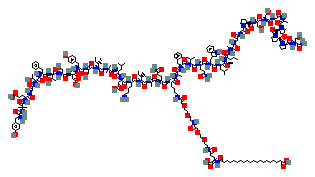
Tirzepatide
Dual GIP/GLP-1 agonist. Research grade.
CAS 2023788-19-2
10mg vial · In stock
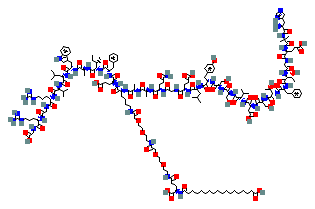
Semaglutide
GLP-1 receptor agonist. Reference standard.
CAS 910463-68-2
5mg vial · In stock
HGH 191aa
Recombinant human growth hormone. Full 191aa sequence.
CAS 12629-01-5
10IU vial · In stock
For laboratory research use only