RAD-140 (Testolone) for Research Reference: Chemistry, Potency Data, and What the Absence of Human Trials Means
Research compounds for laboratory use only · not medical advice
Testolone is the highest-affinity SARM in most published receptor panels — and has zero completed human trials. What preclinical science establishes, what it cannot, and how to spec it analytically.
Chemistry and origin
RAD-140 belongs to Ligand’s second-generation SARM scaffolds: a bicyclic aryl/quinuclidine-adjacent design refined in the 2013 J. Med. Chem. program that produced several tool compounds. Its defining published property is androgen-receptor binding affinity in the sub-nanomolar range across receptor-selectivity assays — the highest recorded in that series — with tissue-anabolic-to-androgenic separation demonstrated in castrated-rat models.
What preclinical data supports — and where it stops
Cell and rodent studies establish: AR agonism with selectivity signatures distinct from testosterone and nandrolone, myocyte anabolic signaling, and SHBG suppression in systemic dosing models. None of this transfers automatically to human physiology, and the absence of trial data is itself information: Ligand advanced other candidates (enobosarm) to the clinic and did not advance RAD-140, which most medicinal-chemistry reviews read as a program decision, not a safety signal with published detail.
For researchers, the legitimate use-cases are the ones human data doesn’t block: receptor pharmacology tool compound, structure-activity comparator, and reference standard in analytical panels. Our SARMs research compounds guide covers the mislabeling literature that drives demand for certified reference material.
Analytical spec sheet
| Parameter | Value |
|---|---|
| IUPAC-lineage | Chloroaryl benzyl-propionamide (Ligand series) |
| Formula / MW | C20H16ClN5O2 / 393.8 g/mol |
| CAS (commonly listed) | 1182367-47-0 |
| Typical assay | HPLC ≥99%, with 1H-NMR and LC-MS confirmation |
| Solubility | DMSO, ethanol; limited water |
| Storage | Room temperature, dry, amber |
The chlorine isotope pattern (M/M+2 ≈ 3:1) makes RAD-140 instantly recognizable in LC-MS screening panels — one reason doping-analysis labs keep it as a standing calibrant. Use the molecular-weight calculator to verify stock concentrations against mass.
Research use only. Not for human consumption. Dosing in any human context is outside the scope of this documentation.
FAQ
Frequently asked questions
What is RAD-140?
Testolone, a chloroaryl benzyl-propionamide SARM from Ligand Pharmaceuticals' preclinical series, characterized in a 2013 Journal of Medicinal Chemistry design-and-synthesis study. C20H16ClN5O2, MW 393.8, CAS 1182367-47-0.
Has RAD-140 been tested in humans?
No completed human trials are published as of 2026. Its biological profile — high AR binding affinity and anabolic signaling — comes from cell and animal models. Head-to-head claims about 'strongest SARM' rest on in-vitro potency rankings, not human outcomes.
Why is it analytically tricky?
RAD-140 is a frequent mislabel subject: Van Wagoner et al. (JAMA 2017) found a large share of SARM products contained unlisted or different compounds. Its LC-MS fragmentation signature is well-characterized, which is exactly why reference-grade material matters for doping-analysis and QC work.
Keep reading
Related articles
SARMs for Research: What the Science Class Actually Is (and Isn't)
A level-headed guide to selective androgen receptor modulators as research compounds — scaffold families, why 'selective' was the point, the mislabeling scandal that defines the market, and what legitimate SARM research looks like.
LGD-4033 (Ligandrol) Research Reference: The Human-Trial SARM With a Suppression Fine-Print
Ligandrol is one of few SARMs with published human-phase data — and that data is precisely what makes it a documentation-first research compound. Chemistry, trial record, and analytical specs.
Ostarine vs RAD-140: What Preclinical Science and One Abandoned Trial Program Show
The two most-searched SARMs compared on the only axes that hold up: receptor pharmacology, published human trial data (one has them, one doesn't), and what the enobosarm program's end tells researchers.
Laboratory tools
Put it into practice
From the catalog
Reference compounds
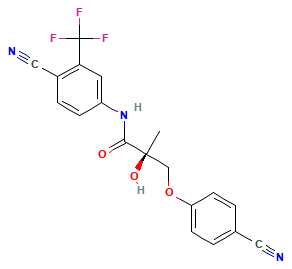
Ostarine (Enobosarm)
Aryl-propionamide SARM reference standard. GTx's phase II compound.
CAS 841205-47-8
10mg vial · In stock
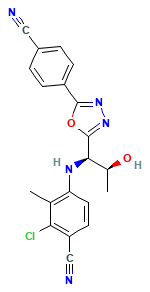
Testolone (RAD-140)
High-affinity benzyl-propionamide SARM from Ligand's preclinical series.
CAS 1182367-47-0
10mg vial · In stock
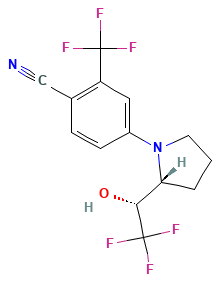
Ligandrol (LGD-4033)
Fluorophenyl oxadiazole-class SARM studied in bone-mass protocols.
CAS 1165910-22-4
10mg vial · In stock
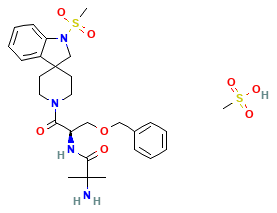
MK-677 (Ibutamoren)
Orally active ghrelin-mimetic GH secretagogue (spiro-piperidine, non-peptide).
CAS 159752-10-0
10mg vial · In stock
For laboratory research use only