LGD-4033 (Ligandrol) Research Reference: The Human-Trial SARM With a Suppression Fine-Print
Research compounds for laboratory use only · not medical advice
Ligandrol is one of few SARMs with published human-phase data — and that data is precisely what makes it a documentation-first research compound. Chemistry, trial record, and analytical specs.
Chemistry
Ligandrol’s design trades the propionamide scaffolds of first-generation SARMs for a trifluoromethyl-phenyl oxadiazole chemotype — a small, orally available AR ligand (C14H12F6N2O, 338.25 g/mol). The fluorine content is analytically useful: it produces a distinctive LC-MS transition set and renders 19F NMR a clean identity check, which is one reason certification labs favor it as a representative matrix standard.
The trial record — what it says both ways
LGD-4033 is in the narrow group of SARMs with published early-phase human data. Two findings define the literature:
- Engagement. Exogenous administration alters the androgen axis predictably in healthy volunteers — the AR-coregulator recruitment models describe Ligandrol as a probe for tissue selectivity precisely because its human PK is characterized.
- Suppression. The documented dose-dependent decrease in endogenous testosterone is the reason this compound’s research documentation cannot be separated from its pharmacology: a compound that suppresses the axis in trial settings behaves in uncontrolled settings exactly as the anti-doping literature reports.
Neither finding supports therapeutic claims — the program did not advance to approval — but together they make Ligandrol a high-evidence compound relative to most of the SARM catalog, where preclinical-only data (see RAD-140) is the norm. Compare against the class overview in the SARMs research compounds guide.
Analytical spec sheet
| Parameter | Value |
|---|---|
| Formula / MW | C14H12F6N2O / 338.25 g/mol |
| CAS (commonly listed) | 1165910-22-4 |
| Class | Aryl oxadiazole, nonsteroidal SARM |
| Typical assay | HPLC ≥99%, NMR + LC-MS confirmation |
| Solubility | DMSO, ethanol |
| Storage | Room temperature, dry, protected from light |
Given the mislabeling rates in commercial SARM products (JAMA 2017), analytical workflows should treat any unlabeled “Ligandrol” as unverified until its fluorinated signature is confirmed; certified reference material removes the guesswork.
Research use only. Not for human consumption.
FAQ
Frequently asked questions
What is LGD-4033?
Ligandrol, a fluorophenyl oxadiazole-class nonsteroidal SARM developed by Ligand Pharmaceuticals for bone- and muscle-mass indications. C14H12F6N2O, MW 338.25, CAS 1165910-22-4.
Has LGD-4033 been tested in humans?
Yes — early-phase human studies were conducted for bone-density and muscle-wasting endpoints. The published trial record also documents dose-dependent suppression of endogenous testosterone, the class effect that complicates any performance context.
Is it approved?
No. The program did not reach approval, but its phase-I/II data remains among the best-documented human pharmacology for any non-steroidal AR ligand — which is why it's a standard substance in doping-analysis reference panels.
Keep reading
Related articles
SARMs for Research: What the Science Class Actually Is (and Isn't)
A level-headed guide to selective androgen receptor modulators as research compounds — scaffold families, why 'selective' was the point, the mislabeling scandal that defines the market, and what legitimate SARM research looks like.
RAD-140 (Testolone) for Research Reference: Chemistry, Potency Data, and What the Absence of Human Trials Means
Testolone is the highest-affinity SARM in most published receptor panels — and has zero completed human trials. What preclinical science establishes, what it cannot, and how to spec it analytically.
Ostarine vs RAD-140: What Preclinical Science and One Abandoned Trial Program Show
The two most-searched SARMs compared on the only axes that hold up: receptor pharmacology, published human trial data (one has them, one doesn't), and what the enobosarm program's end tells researchers.
Laboratory tools
Put it into practice
From the catalog
Reference compounds
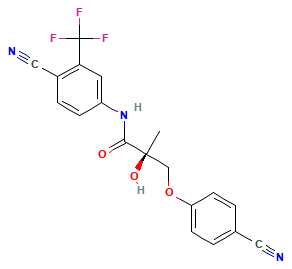
Ostarine (Enobosarm)
Aryl-propionamide SARM reference standard. GTx's phase II compound.
CAS 841205-47-8
10mg vial · In stock
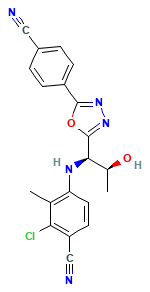
Testolone (RAD-140)
High-affinity benzyl-propionamide SARM from Ligand's preclinical series.
CAS 1182367-47-0
10mg vial · In stock
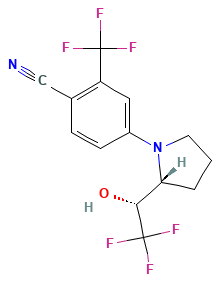
Ligandrol (LGD-4033)
Fluorophenyl oxadiazole-class SARM studied in bone-mass protocols.
CAS 1165910-22-4
10mg vial · In stock
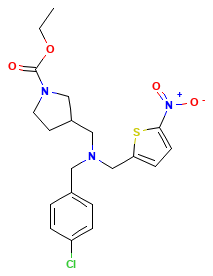
SR-9009 (Stenabolic)
REV-ERB agonist often shelved with SARMs — mechanism is distinct.
CAS 1379686-30-2
10mg vial · In stock
For laboratory research use only