Ostarine vs RAD-140: What Preclinical Science and One Abandoned Trial Program Show
Research compounds for laboratory use only · not medical advice
The two most-searched SARMs compared on the only axes that hold up: receptor pharmacology, published human trial data (one has them, one doesn't), and what the enobosarm program's end tells researchers.
The two biggest names in the SARM aisle share a receptor and almost nothing else — least of all a human evidence base.
Pharmacology
Both are non-steroidal AR ligands; neither aromatizes (there’s no 17β-hydroxysteroid handle for aromatase to work with — the point of the class). The scaffold families differ: ostarine is the arylpropionamide prototype of the GTx program, RAD-140 the bicyclic aryl/quinuclidine design from the 2013 preclinical characterization (full AR selectivity comparison: Christiansen 2020 review). In direct binding work, RAD-140 is reported as the higher-affinity ligand — which is precisely the number marketing decks inflate into a dosing story it can’t support.
Evidence — the asymmetry is the article
Ostarine has human data, and it’s cautionary. Phase II in older adults: lean mass up, endogenous testosterone down dose-dependently (PMC3177038). The hip-fracture recovery program then halted after a mortality imbalance in the highest-dose arm — the single most-cited safety signal in the entire class.
RAD-140 has none. No registered completed human trials; everything published is design and preclinical characterization (Hwang 2013). “More potent in rats” is a legitimate research finding and an illegitimate human claim — the gap between those two sentences is the SARM market.
Analytical reality
Van Wagoner et al. (JAMA 2017) GC-MS/MS-audited 76 marketed “SARM” products: barely half matched their labels; unapproved pro-drug modifications (masked versions of S-4 and others) were discovered in the bottles themselves. If a study is buying “RAD-140” from a consumer channel, the independent variable may be an unknown compound. The research-grade response is batch COAs with mass data you can verify against the MW calculator — catalog pages: Ostarine, RAD-140, LGD-4033.
Research-use framing
Both compounds sit in the catalog as analytical reference materials for AR-pathway and doping-analysis research, at preclinical doses only, with the enobosarm outcome data stated on the page beside the CAS number. No dose here is a human recommendation; there are no human doses for this class.
For laboratory research use only. Not medical advice.
FAQ
Frequently asked questions
What is the main scientific difference between ostarine and RAD-140?
Scaffold and evidence depth. Ostarine (enobosarm) is an arylpropionamide with multiple completed human trials — the most-documented SARM pharmacologically. RAD-140 is a bicyclic aryl/quinuclidine design with published preclinical binding data but no completed human trials as of 2026.
Has either been approved?
Neither. Enobosarm's late-stage program in elderly muscle wasting ended after the hip-fracture studies, and the 25 mg/day arm showed a mortality imbalance that stopped further high-dose development. RAD-140 never entered the trial pipeline.
Which has more published research?
Ostarine, by a wide margin — phase II data in older adults showed lean-body-mass gain with dose-dependent testosterone suppression, plus the hip-fracture program literature. RAD-140's published profile is medicinal-chemistry and preclinical.
Why does the market still push RAD-140?
Because 'no human data' reads as 'potent' in marketing copy. The JAMA 2017 audit found much of what was sold as RAD-140 wasn't even RAD-140 — the product claims outran the analysis.
Keep reading
Related articles
LGD-4033 (Ligandrol) Research Reference: The Human-Trial SARM With a Suppression Fine-Print
Ligandrol is one of few SARMs with published human-phase data — and that data is precisely what makes it a documentation-first research compound. Chemistry, trial record, and analytical specs.
Winstrol, Anavar or Dianabol: Oral Androgens Compared
Mechanism, molecular weight, half-life and research uses of stanozolol, oxandrolone and methandrostenolone — the three oral reference standards in the catalog.
RAD-140 (Testolone) for Research Reference: Chemistry, Potency Data, and What the Absence of Human Trials Means
Testolone is the highest-affinity SARM in most published receptor panels — and has zero completed human trials. What preclinical science establishes, what it cannot, and how to spec it analytically.
Laboratory tools
Put it into practice
From the catalog
Reference compounds
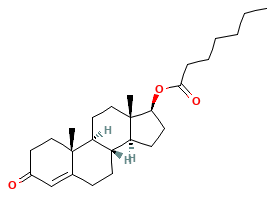
Testosterone Enanthate
Long-ester testosterone. 250mg/mL in USP-grade carrier oil.
CAS 315-37-7
10mL vial · In stock
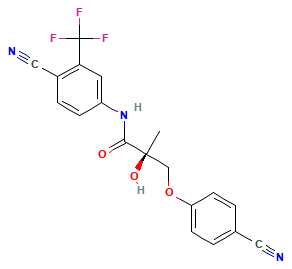
Ostarine (Enobosarm)
Aryl-propionamide SARM reference standard. GTx's phase II compound.
CAS 841205-47-8
10mg vial · In stock
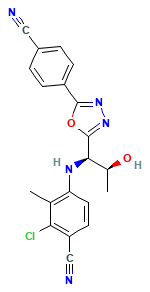
Testolone (RAD-140)
High-affinity benzyl-propionamide SARM from Ligand's preclinical series.
CAS 1182367-47-0
10mg vial · In stock
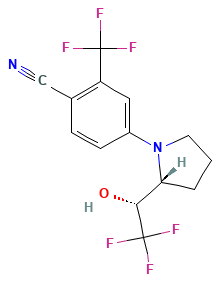
Ligandrol (LGD-4033)
Fluorophenyl oxadiazole-class SARM studied in bone-mass protocols.
CAS 1165910-22-4
10mg vial · In stock
For laboratory research use only