SR-9009: A REV-ERB Agonist, Not a SARM
Research compounds for laboratory use only · not medical advice
By Vyroval Research Desk — an institutional byline. PubMed-linked sources are checked against their indexed records; how this desk works.
SR-9009 is shelved with SARMs by vendors and binds no androgen receptor at all. What it actually targets, why its oral exposure is poor, and what the published case report records.
A categorisation error worth correcting
SR-9009 is sold alongside SARMs, sometimes in the same bundle, and it binds the androgen receptor with no meaningful affinity. The target is REV-ERBα and REV-ERBβ — nuclear receptors that sit in the circadian clock loop as transcriptional repressors. That is a different receptor family, a different mechanism, and a different set of downstream effects.
The misclassification is commercially convenient and scientifically misleading. A laboratory that shelves SR-9009 with its androgen-receptor ligands will design the wrong controls: no antiandrogen will block it, and no AR-binding assay will detect it. Its pharmacology belongs with the clock and metabolic literature, not with the SARM series.
Mechanism, briefly
REV-ERB represses transcription of BMAL1, one of the core clock activators. Agonism therefore tightens the repressive arm of the loop, suppressing a broad set of clock-controlled genes. In the original characterisation in mice, this produced changes in lipid metabolism, mitochondrial content in skeletal muscle, and exercise capacity — effects measured in animals, not established in humans.
The mechanism explains the compound’s appeal in metabolic research and its limits: it is a tool for interrogating clock control of metabolism, not for interrogating androgen signalling.
Pharmacokinetics: the part that constrains every study
The published in vivo work used parenteral administration because oral exposure in mice was poor. That single fact should shape how any SR-9009 experiment is read. An oral preparation is not a route substitution — it is a different exposure curve, usually with much lower systemic levels and a different metabolite profile. Comparisons between an oral preparation and the published intraperitoneal data are comparisons between two different experiments.
Half-life in rodents is short, which is why the original protocols used repeated dosing rather than a single administration. Any study design that assumes once-daily exposure is making an assumption the source literature does not support.
The safety record, as published
A 2026 case report describes acute liver failure in an adolescent following SR-9009 use. A single case report cannot establish incidence or causality with confidence, and it is not a substitute for controlled data — but it is a published clinical observation about a compound that has never been through a phase I programme, and laboratories working with it should know the report exists rather than encountering it as a surprise.
The broader point is procedural: compounds sold outside any regulatory pathway accumulate exactly this kind of signal, one case at a time, and the absence of a systematic record is not evidence of safety.
Analytical characterisation
| Parameter | Value |
|---|---|
| Formula / MW | C20H24ClN3O4S / 437.9 g/mol |
| CAS | 1379686-30-2 |
| Class | Synthetic REV-ERBα/β agonist (thiazole-sulfonamide series) |
| Typical assay | HPLC-UV ≥99%, LC-MS/MS confirmation |
| Identity handles | Chlorine isotope pattern, sulfur-containing fragment ions |
| Solubility | DMSO, ethanol |
| Storage | Room temperature, dry, protected from light |
The chlorine atom gives a distinctive 3:1 isotope envelope in LC-MS that is a fast identity check, and published high-resolution metabolic profiling in liver preparations provides a reference set for metabolites. As with every compound in this catalog, purity by HPLC establishes chemical cleanliness, not receptor activity — the two are separate measurements and the analytical testing guide explains why the distinction matters.
Where it fits
If the study question is androgen-receptor signalling, the ostarine guide and the LGD-4033 reference are the starting points, and the SARMs class overview explains the series. If the question is circadian or metabolic, SR-9009 is the tool — and it belongs on a different shelf.
The SARMs hub collects the compound set with the caveat stated at the top: this one is here for catalog completeness, not because it shares a mechanism.
Research use only. Not for human consumption.
FAQ
Frequently asked questions
Is SR-9009 a SARM?
No. It is a synthetic agonist of the nuclear receptors REV-ERBα and REV-ERBβ and has no androgen-receptor activity. It is grouped with SARMs commercially, not pharmacologically.
What does REV-ERB agonism do?
REV-ERB represses BMAL1 and the core circadian clock loop. Agonism suppresses clock-driven gene expression, which in rodent models changes lipid handling, mitochondrial content and exercise capacity.
Why does oral bioavailability matter here?
The original characterisation used parenteral dosing because oral exposure in mice was poor. Any in vivo comparison that assumes an oral route is comparing a different exposure profile from the one in the published work.
What is the safety signal?
A published 2026 case report describes acute liver failure in an adolescent following SR-9009 use. It is a single case, not an incidence estimate, but it is the kind of report a laboratory should know exists.
How is it characterised analytically?
By LC-MS/MS with the chlorinated isotope pattern as an identity check, and by high-resolution metabolic profiling in liver preparations. C20H24ClN3O4S, MW 437.9, CAS 1379686-30-2.
References
Selected literature for the compounds discussed
These papers are background literature on the compounds referenced above — they are not citations of this article.
- [1]Solt L.A., et al. "Regulation of circadian behaviour and metabolism by synthetic REV-ERB agonists." Nature, 2012.
- [2]Shams Bin Shaheen S., et al. "Acute Liver Failure in an Adolescent Following Use of the Synthetic REV-ERB Agonist SR9009." Case Reports Hepatol, 2026.
- [3]Palmieri C., et al. "Activity and safety of enobosarm, a novel, oral, selective androgen receptor modulator, in androgen receptor-positive, oestrogen receptor-positive, and HER2-negative advanced breast cancer (Study G200802): a randomised, open-label, multicentre, multinational, parallel design, phase 2 trial." Lancet Oncol, 2024.
- [4]Crawford J., et al. "Study Design and Rationale for the Phase 3 Clinical Development Program of Enobosarm, a Selective Androgen Receptor Modulator, for the Prevention and Treatment of Muscle Wasting in Cancer Patients (POWER Trials)." Curr Oncol Rep, 2016.
- [5]Brown A.M., et al. "RAD140 (Testolone) negatively impacts skeletal muscle adaptation, frailty status and mortality risk in female mice." Clin Exp Pharmacol Physiol, 2023.
- [6]Yu Z., et al. "Selective Androgen Receptor Modulator RAD140 Inhibits the Growth of Androgen/Estrogen Receptor-Positive Breast Cancer Models with a Distinct Mechanism of Action." Clin Cancer Res, 2017.
Keep reading
Related articles
Andarine (S-4): The First-Generation SARM Standard
Andarine is the molecule that defined the SARM template — and the one whose retinal off-target findings defined the limits of the selectivity claim. Chemistry, detection and handling.
Ostarine (MK-2866): The Prototype SARM, Revisited
Enobosarm is the most studied SARM in the catalog: phase II human data, a single stereocentre that decides what the standard actually is, and a documentation trail worth reading before any assay.
LGD-4033 (Ligandrol): The Human-Trial SARM
Ligandrol is one of few SARMs with published human-phase data — and that data is precisely what makes it a documentation-first research compound. Chemistry, trial record, and analytical specs.
Laboratory tools
Put it into practice
From the catalog
Reference compounds
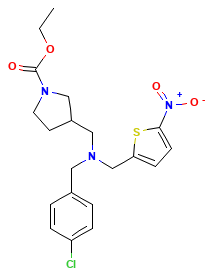
SR-9009 (Stenabolic)
REV-ERB agonist often shelved with SARMs — mechanism is distinct.
CAS 1379686-30-2
Ships in 3–5 days10mg vial · In stock
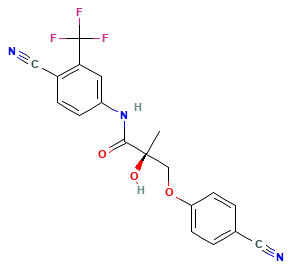
Ostarine (Enobosarm)
Aryl-propionamide SARM reference standard. GTx's phase II compound.
CAS 841205-47-8
Ships in 3–5 days10mg vial · In stock
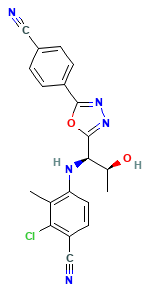
Testolone (RAD-140)
High-affinity benzyl-propionamide SARM from Ligand's preclinical series.
CAS 1182367-47-0
Ships in 3–5 days10mg vial · In stock
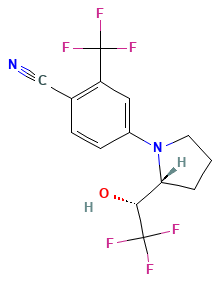
Ligandrol (LGD-4033)
Fluorophenyl oxadiazole-class SARM studied in bone-mass protocols.
CAS 1165910-22-4
Ships in 3–5 days10mg vial · In stock
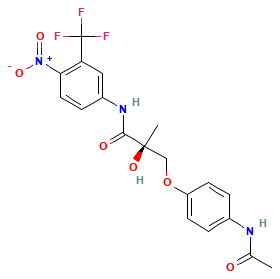
Andarine (S-4)
Nitrophenoxy-acetamide prototype from Ligand's original SARM series.
CAS 401900-40-1
Ships in 3–5 days10mg vial · In stock
For laboratory research use only