Importing Research Peptides: Documents, Alerts and Holds
Research compounds for laboratory use only · not medical advice
By Vyroval Research Desk — an institutional byline. PubMed-linked sources are checked against their indexed records; how this desk works.
What actually decides an import: entry data, import alerts and DWPE, recall history, and how to verify a supplier's claims against FDA's own records. Not legal advice.
What this page is, and is not
This is a research note on how the United States import framework treats research peptides, written from FDA’s own published material. It is not legal advice, and it does not tell you whether a specific shipment is lawful: that depends on the compound, the intended use, the importer of record, the port and the policy in force on the day of entry. Use it to ask better questions of a qualified regulatory professional, not to replace one.
The framing matters because the two failure modes are symmetrical. Treating an import as a purely logistical exercise gets shipments detained. Treating a customs broker’s assurance as a compliance opinion gets the same result one step later.
The statutory layer that sits behind any import
Compounded drugs are not FDA-approved, and FDA does not review them for safety, effectiveness or quality before they reach patients — that is stated plainly on FDA’s human drug compounding laws page. Section 503A of the Food, Drug and Cosmetic Act describes the conditions under which a compounded human drug product is exempt from the approval, CGMP and adequate-directions-for-use requirements.
For a bulk substance, the 503A bulks page sets three cumulative conditions: the substance must comply with an applicable USP or NF monograph where one exists, or be a component of an FDA-approved drug, or appear on FDA’s 503A bulks list. On top of that, the substance must be accompanied by a valid certificate of analysis and must have been manufactured by an establishment registered with FDA under section 510 of the Act.
That last sentence is where most supplier conversations break down. A COA proves a batch was analysed. It does not prove the manufacturing site is registered, and it does not prove the substance is one of the three permissible categories. Those are separate questions with separate evidence.
Import alerts and detention without physical examination
FDA’s import alerts page explains the mechanism: alerts identify products and firms that appear to violate FDA law, and listed shipments can be detained without physical examination — DWPE — under the “appearance standard” in section 801 of the Act. The alert itself states the reason, the affected products and firms, and the evidence an importer can present to secure release.
The list structure is the part practitioners get wrong. Firms or products on an alert’s red or yellow list are subject to DWPE. Firms on a green list are exempt from DWPE under that alert — and absence from the green list means the exemption does not apply. Reading a green list as “everyone else is fine” inverts the logic.
Import alerts are updated in real time and searchable by firm name, product and country, which makes them a check you can run before placing an order rather than after a hold. For drug products from firms that have not met GMP requirements, the relevant alert is the long-running DWPE alert 66-40; the import alert index lists it with the current publish date.
Recalls and withdrawals as supplier signals
FDA’s recalls, market withdrawals and safety alerts database is the second public record worth searching. It is not a compliance certificate either: most recalls are voluntary, and a company with no recalls is not thereby verified. What the database does provide is a documented history — undeclared active ingredients, particulate contamination, subpotent batches — against a named firm and a named product.
Two searches are worth running before a first order: the firm name, and the product name. A firm that appears under a different brand is still the same firm.
Between the policy record and the recall record sits a third database, and it is the one that answers “has this actually happened”. FDA’s Import Refusal Report lists individual refusals from the past year by firm, country and product. A refusal is a concrete event — a shipment offered for entry and turned away — whereas an import alert is a policy state. A supplier can accumulate refusals under a specific product code without ever being placed on an alert, which makes this the narrower check when the question is about one product rather than one company.
Verifying supplier claims: a short checklist
| Claim | Where to check it | What it does not prove |
|---|---|---|
| “GMP-certified facility” | FDA establishment registration and inspection records | That this batch came from that site |
| “COA available for every batch” | The COA itself: lot number, method, wavelength, date | Identity of the material in your vial |
| “Never been on an import alert” | Import alert search by firm and product | That a future shipment clears |
| “No recall history” | Recalls database, firm and product | Product quality of your lot |
| “USP grade” | The USP monograph for that substance, if one exists | That the 503A conditions are met |
The COA is a document about a batch; the registration is a document about a site; the alert and recall records are documents about a firm’s history. A supplier that can produce all three, and whose name does not appear in the latter two, is a materially different counterparty from one that can produce only the first.
Where the primary text lives
Read the sources rather than this summary: human drug compounding laws, bulk substances under 503A, import alerts, import refusals and recalls. For the compound-level documentation discussed here, see the quality assurance page and the analytical testing guide; the regulatory hub collects the rest of this cluster.
Research use only. Not for human consumption. This page is not legal advice.
FAQ
Frequently asked questions
Is this legal advice?
No. This is a research-note summary of how FDA's published import and compounding frameworks work, with links to the primary pages. Import status depends on the specific product, the filer, the port and current policy; consult a qualified regulatory professional for your shipment.
What is an import alert?
A published notice that identifies products or firms that appear to violate FDA law. Once a product is listed, shipments can be detained without physical examination — DWPE — until the importer rebuts the appearance of the violation.
What is the difference between the red, yellow and green lists?
Firms or products on an alert's red or yellow list are subject to detention without physical examination. Firms on a green list are exempt from DWPE under that alert. Absence from a green list means the exemption does not apply.
Does a supplier's COA prove the material is compliant?
No. A COA is a batch document about identity and purity. Section 503A separately requires that bulk substances be accompanied by a valid certificate of analysis and be made by an establishment registered with FDA — two different claims that a single PDF does not establish.
How do I check a supplier's claim without taking their word?
Cross-check the establishment against FDA's registration and inspection records, search import alerts by firm name and by product, and check the recall database. A supplier whose name appears on an alert has a documented history you can read directly.
References
Selected literature for the compounds discussed
These papers are background literature on the compounds referenced above — they are not citations of this article.
- [1]Sikiric P., et al. "Pentadecapeptide BPC 157 and the stomach." Journal of Physiology (Paris), 1993.
- [2]Sikiric P., et al. "Stable gastric pentadecapeptide BPC 157: novel therapy in gastrointestinal tract damage." Current Pharmaceutical Design, 2011.
- [3]Kleinman H.K., et al. "Thymosin β4 accelerates wound healing." Journal of Investigative Dermatology, 2000.
- [4]Sosne G., et al. "Thymosin beta4: a potential novel therapy for neurotrophic keratopathy." Expert Opinion on Biological Therapy, 2004.
- [5]Palmieri C., et al. "Activity and safety of enobosarm, a novel, oral, selective androgen receptor modulator, in androgen receptor-positive, oestrogen receptor-positive, and HER2-negative advanced breast cancer (Study G200802): a randomised, open-label, multicentre, multinational, parallel design, phase 2 trial." Lancet Oncol, 2024.
- [6]Crawford J., et al. "Study Design and Rationale for the Phase 3 Clinical Development Program of Enobosarm, a Selective Androgen Receptor Modulator, for the Prevention and Treatment of Muscle Wasting in Cancer Patients (POWER Trials)." Curr Oncol Rep, 2016.
Keep reading
Related articles
Testing SARMs: Purity, Adulteration and Assay Design
Chemical purity is not receptor activity, and a label is not an identity. How SARM reference materials are actually verified — methods, common adulterants and the questions to ask.
BPC-157 and the 503A Bulks List: July 2026
BPC-157 was recommended for the FDA 503A Bulks List in July 2026 — what the vote means, what it doesn't change, and the research status of the pentadecapeptide.
BPC-157: The Complete Research Reference
Identity, stability, reconstitution arithmetic, the published animal models, and where the evidence stops — a single entry point to every BPC-157 page in the journal.
Laboratory tools
Put it into practice
From the catalog
Reference compounds
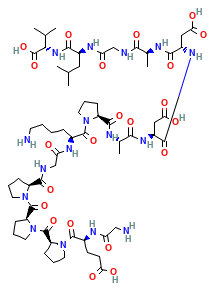
BPC-157
Pentadecapeptide. Gastric pentadecapeptide research.
CAS 137525-51-0
Ships in 3–5 days5mg vial · In stock
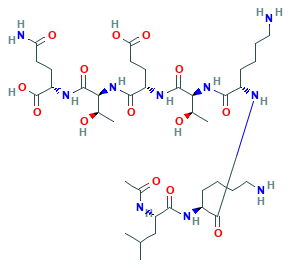
TB-500
Thymosin β4 fragment. Actin-binding domain active.
CAS 885340-08-9
Ships in 3–5 days5mg vial · In stock
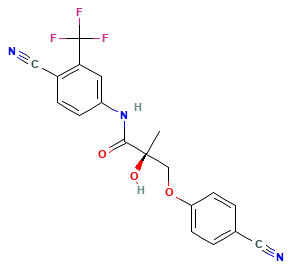
Ostarine (Enobosarm)
Aryl-propionamide SARM reference standard. GTx's phase II compound.
CAS 841205-47-8
Ships in 3–5 days10mg vial · In stock
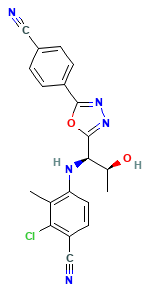
Testolone (RAD-140)
High-affinity benzyl-propionamide SARM from Ligand's preclinical series.
CAS 1182367-47-0
Ships in 3–5 days10mg vial · In stock
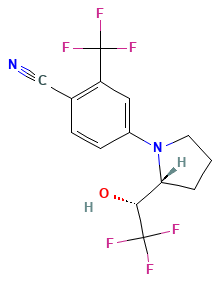
Ligandrol (LGD-4033)
Fluorophenyl oxadiazole-class SARM studied in bone-mass protocols.
CAS 1165910-22-4
Ships in 3–5 days10mg vial · In stock
For laboratory research use only