BPC-157: The Complete Research Reference
Research compounds for laboratory use only · not medical advice
By Vyroval Research Desk — an institutional byline. PubMed-linked sources are checked against their indexed records; how this desk works.
Identity, stability, reconstitution arithmetic, the published animal models, and where the evidence stops — a single entry point to every BPC-157 page in the journal.
What this page is
This is the entry point to everything BPC-157 in the journal: identity and handling on this page, then seven articles that each take one question deeper. It is written for laboratory readers deciding whether a compound is worth working with and how to document it — not for anyone looking for a protocol. There is no dosing guidance here, and none of the published material supports one.
Identity
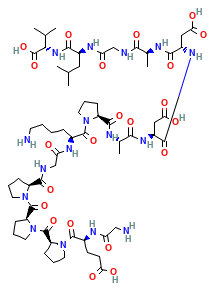
BPC-157 is a synthetic pentadecapeptide with the sequence GEPPPGKPADDAGLV, derived from a fragment of a protein found in human gastric juice. It is unusually rich in proline and glycine, which gives it a compact, protease-resistant shape and — according to the literature that first characterised it — measurable stability in acidic conditions that would degrade most peptides.
| Parameter | Value |
|---|---|
| Sequence | GEPPPGKPADDAGLV (15 aa) |
| Formula / MW | C62H98N16O22 / 1419.5 g/mol |
| CAS | 137525-51-0 |
| Form supplied | Lyophilized powder, 5 mg vial |
| Purity (HPLC) | 99.5% typical, batch-specific |
| Solubility | Water |
| Storage | −20 °C, lyophilized |
Identity in a certificate of analysis needs more than a purity percentage: the observed mass against the theoretical monoisotopic mass, plus the HPLC retention against a reference standard. A 15-residue peptide has enough sequence neighbours that a percentage alone cannot distinguish it from a near-analogue.
Stability and handling
The powder is the stable form. Kept cold, dry and protected from light, a lyophilized vial holds its specification for the labelled period; the failure modes that matter in practice are moisture ingress on repeated warming to room temperature before opening, and freeze-thaw cycling once in solution.
Reconstituted material behaves differently. Working solutions are typically kept cold and used within a short window, and the reason is not mysterious: a peptide in water is exposed to hydrolysis, to adsorption onto surfaces, and to oxidation of its methionine-free but still oxidation-prone residues at the termini. If an assay shows an unexplained drop in response, the usual causes are solution age, adsorption to the vessel, and a concentration that was wrong from the first dilution — in that order. The storage guide covers the general case.
Reconstitution arithmetic
The arithmetic is one division, and it is still the step most often done wrong because the inputs are wrong rather than the operator. Three inputs decide the answer: the actual fill mass (a nominal “5 mg” vial is filled to a target with a tolerance), the volume the syringe really delivered, and whether the dead volume in the needle was accounted for.
Worked examples at a nominal 5 mg fill:
| Solvent added | Concentration | 10 µL contains |
|---|---|---|
| 1.0 mL | 5.0 mg/mL | 50 µg |
| 2.5 mL | 2.0 mg/mL | 20 µg |
| 5.0 mL | 1.0 mg/mL | 10 µg |
Use the reconstitution calculator and the dilution calculator rather than re-deriving these by hand, and record the volume actually delivered — a 1 mL syringe marked in hundredths resolves 10 µL, a 0.3 mL barrel caps the volume but resolves less. The full treatment, including the blend case where total mass and per-component fraction both matter, is in BPC-157 dosage and reconstitution math.
What the published literature reports
The BPC-157 record is wide and almost entirely preclinical. The models that recur across it:
- Gastrointestinal injury. Rodent models of gastric and intestinal ulceration, including acid- and NSAID-induced lesions, with mucosal protection and healing endpoints. This is where the compound’s origin story sits, and where the model literature is densest.
- Tendon, ligament and muscle. Rat models of transected tendon and muscle injury, with fibroblast activity and biomechanical endpoints. The mechanism article walks through the proposed pathways, including the VEGFR2 and nitric-oxide signalling that the literature most often invokes.
- Angiogenesis and vascular models. In vitro and small-animal work on tube formation and vessel growth, again with receptor-level hypotheses attached.
- Inflammatory and ischaemia-reperfusion models. A smaller set, usually as one arm of a broader gastrointestinal study.
The sequencing of this list is deliberate: it runs from the models with the most replication to those with the least.
Where the evidence stops
Four limits matter more than any single positive result.
- Species. The overwhelming majority of the record is rodent. Rodent healing biology differs from human in the pathways BPC-157 is proposed to act on, and no controlled human trial has established either efficacy or a safe exposure range.
- Sample size and replication. Many studies are small, and a meaningful share of the positive literature comes from a small number of research groups. Independent replication is thinner than the citation count suggests.
- Endpoint heterogeneity. “Healing” is measured differently across studies — histology, biomechanical load, planimetry — which makes pooling results across papers unreliable.
- Publication and framing effects. Search the literature and the negative or null studies are hard to find. That asymmetry is a property of the field, not evidence about the molecule.
None of this means the compound is uninteresting. It means the honest summary is “promising in rodents, unproven in humans”, and that any programme built on it should be designed to detect its own null result.
Regulatory status
BPC-157 is not approved for any human indication anywhere. In the United States it has been the subject of 503A bulk-substance proceedings: the Food, Drug and Cosmetic Act allows a licensed compounding pharmacy to use a bulk substance only where it complies with a USP monograph, is a component of an approved drug, or appears on FDA’s 503A bulks list — and BPC-157’s path through that process, including the July 2026 advisory-committee recommendation, is documented in BPC-157 and the 503A bulks list. Import enforcement is a separate track, covered in the regulatory hub and the import compliance article.
What this means for a laboratory is narrow: the material is sold as a research reference standard, the regulatory questions are about compounding and import rather than about the chemistry, and a supplier’s compliance claims are checkable against public records.
The seven articles in this cluster
| Question | Article |
|---|---|
| What does it do at the pathway level? | BPC-157 mechanism of action |
| How do I do the vial arithmetic? | Dosage and reconstitution math |
| How does it compare with TB-500? | BPC-157 vs TB-500 |
| What does the fixed blend ratio mean? | BPC-157 + TB-500 blend |
| How does it compare with GHK-Cu? | GHK-Cu vs BPC-157 |
| How does it compare with KPV? | KPV vs BPC-157 |
| Where does it stand with FDA? | BPC-157 and the 503A bulks list |
The compound itself, with per-batch HPLC data and packaging, is on the BPC-157 product page; documentation practice across the catalog is described on the quality assurance page.
Research use only. Not for human consumption. Nothing on this page is dosing or clinical guidance.
FAQ
Frequently asked questions
What is BPC-157?
A synthetic pentadecapeptide (15 amino acids, GEPPPGKPADDAGLV) derived from a sequence found in human gastric juice protein. C62H98N16O22, MW 1419.5, CAS 137525-51-0. Supplied as a lyophilized reference material for laboratory and preclinical work.
Has BPC-157 been tested in humans?
It has no approved human indication anywhere. The published record is dominated by rodent models and in vitro work; small human exposures have been described in the literature but do not constitute controlled efficacy data, and none of it supports a dosing protocol.
How is a 5 mg vial reconstituted?
Divide the fill mass by the solvent volume: 5 mg in 2.5 mL gives 2.0 mg/mL; 5 mg in 1 mL gives 5.0 mg/mL. Use the reconstitution calculator rather than mental arithmetic, and record the lot and the actual volume delivered.
Is BPC-157 stable in solution?
The lyophilized powder is the stable form and is stored cold and dry. Once reconstituted, the working solution is markedly less stable; repeated warming and freeze-thaw cycles are the usual causes of apparent loss of activity.
What is its regulatory status?
Not FDA-approved for any indication. It has been the subject of 503A bulk-substance discussion and of import enforcement activity; the regulatory record is summarised below and covered in detail in the linked 503A article.
References
Selected literature for the compounds discussed
These papers are background literature on the compounds referenced above — they are not citations of this article.
- [1]Sikiric P., et al. "Pentadecapeptide BPC 157 and the stomach." Journal of Physiology (Paris), 1993.
- [2]Sikiric P., et al. "Stable gastric pentadecapeptide BPC 157: novel therapy in gastrointestinal tract damage." Current Pharmaceutical Design, 2011.
- [3]Kleinman H.K., et al. "Thymosin β4 accelerates wound healing." Journal of Investigative Dermatology, 2000.
- [4]Biçer O., et al. "Effects of BPC-157 and TB-500 on Achilles tendon healing in rats: A histopathological and biomechanical study." Jt Dis Relat Surg, 2026.
- [5]Sosne G., et al. "Thymosin beta4: a potential novel therapy for neurotrophic keratopathy." Expert Opinion on Biological Therapy, 2004.
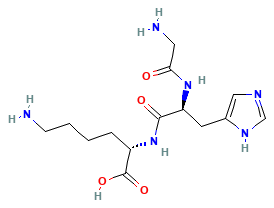
- [6]Pickart L., Thaler M.M. "Tripeptide in human serum which prolongs survival of normal liver cells and stimulates growth in neoplastic liver." Nature, 1973.
Keep reading
Related articles
BPC-157 and the 503A Bulks List: July 2026
BPC-157 was recommended for the FDA 503A Bulks List in July 2026 — what the vote means, what it doesn't change, and the research status of the pentadecapeptide.
BPC-157 Mechanism of Action: Repair Pathways
Angiogenesis, nitric-oxide modulation, fibroblast activity and GI mucosal protection — the mechanisms behind BPC-157's tissue-repair research profile.
TB-500 Mechanism: Thymosin Beta-4 Fragment
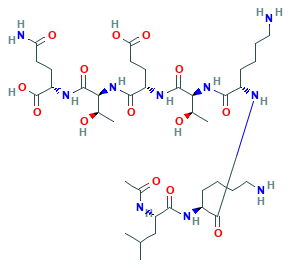
How TB-500's conserved actin-binding (LKKTETQ) domain drives the cell-migration and tissue-repair mechanisms studied in research.
From the catalog
Reference compounds
BPC-157
Pentadecapeptide. Gastric pentadecapeptide research.
CAS 137525-51-0
Ships in 3–5 days5mg vial · In stock
BPC-157 + TB-500 Blend
BPC-157 5mg + TB-500 5mg pre-mixed blend. Canonical tissue-repair combination.
Lyophilized powder
Ships in 5–7 days10mg blend vial · In stock
TB-500
Thymosin β4 fragment. Actin-binding domain active.
CAS 885340-08-9
Ships in 3–5 days5mg vial · In stock
GHK-Cu
Copper tripeptide-1. Tissue regeneration studies.
CAS 49557-75-7
Ships in 3–5 days50mg vial · In stock
KPV
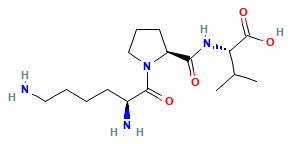
Anti-inflammatory tripeptide (Lys-Pro-Val). α-MSH fragment.
CAS 67727-97-3
Ships in 3–5 days10mg vial · In stock
For laboratory research use only