BPC-157 + TB-500 Blend: What the Fixed 5 mg : 5 mg Ratio Means in Practice
Research compounds for laboratory use only · not medical advice
The canonical repair-pathway blend explained — why 5:5 mg, how to reconstitute a 10 mg dual-vial, per-component dosing math, and when separate vials beat a blend.
The 5 mg : 5 mg BPC + TB vial is the most-ordered blend in every wholesale code sheet — and the one most often mis-mathed in the hood. Here is the honest arithmetic.
What the vial actually is
One lyophilized cake containing both peptides at equal mass. Reconstituted to 2.0 mL bacteriostatic water, the vial holds 5 mg + 5 mg distributed in the same liquid: 2.5 mg/mL BPC-157 and 2.5 mg/mL TB-500 at every µL. There is no separation step; every draw carries both in 1:1 mass.
The reconstitution calculator handles the BPC side of the number exactly as for a single vial; then read the TB side off the same volume — the concentrations are equal by construction. For syringe work, the U-100 converter applies: at 2.5 mg/mL, 10 units (0.1 mL) carries 250 µg of each peptide.
Where the blend fits — and where it doesn’t
Fits: paired-pathway designs that want equimolar-mass co-exposure in one vessel, and where vial-count reduction matters (fewer openings, fewer contamination events, one batch to document).
Doesn’t fit: asymmetric designs. Much of the repair literature uses BPC at 2–10× the TB-500 mass per day — with a 1:1 blend that would over-deliver TB-500. Buy the separate vials and TB-500 for those.
Mechanism-level reasoning for the pairing — one peptide acting through growth-factor/NO signaling, the other through actin dynamics — is covered in the BPC-157 vs TB-500 comparison; storage and shipping match the components: −20 °C lyophilized, water-reconstitutable, shipped with one batch COA covering both actives.
For laboratory research use only. Not medical advice.
FAQ
Frequently asked questions
What is in the BPC + TB blend?
5 mg BPC-157 and 5 mg TB-500 lyophilized in one vial — a fixed 1:1 mass ratio, the format wholesale catalogs code as the canonical 'combo' blend.
How do you reconstitute a dual-active vial?
Like any lyophilized vial: BAC water down the wall, tip to mix, no shaking. The math changes only in interpretation — a final volume of 2 mL means 2.5 mg/mL of each peptide simultaneously.
Can you still dose the two peptides independently?
Not truly — a 1:1 blend locks the mass ratio. Protocols that need more BPC than TB (or the reverse) are better served by separate vials; the blend fits designs where a fixed 1:1 mass ratio per aliquot is the point.
Why blend them at all?
One injection, one vial, one COA line — fewer handling steps. The two peptides act on different repair pathways (BPC-157 systemic and local signaling, TB-500 via actin sequestration), which is why the pairing became the default stack in survey data of research protocols.
Keep reading
Related articles
BPC-157 Dosage and Reconstitution Math: 5 mg Vial in the Lab
BPC-157 vial math — reconstituting a 5 mg lyophilized vial, mg to mL and U-100 unit conversions, and common research dose ranges.
GLOW & KLOW Blends: What's Inside the Four-Peptide Combos
GLOW (BPC-157 + GHK-Cu + TB-500) and KLOW (GLOW + KPV) — what each blend actually contains, why pre-blending at fixed ratios, and the reconstitution math per component.
TB-500 Dosage and Reconstitution Math: 5 mg Vial in the Lab
TB-500 vial math — reconstituting a 5 mg thymosin beta-4 fragment vial, mg to mL and U-100 unit conversions, and common research dose ranges.
Laboratory tools
Put it into practice
From the catalog
Reference compounds
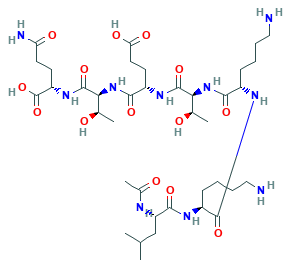
TB-500
Thymosin β4 fragment. Actin-binding domain active.
CAS 885340-08-9
5mg vial · In stock
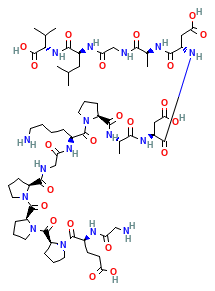
BPC-157
Pentadecapeptide. Gastric pentadecapeptide research.
CAS 137525-51-0
5mg vial · In stock

Bacteriostatic Water
0.9% benzyl alcohol, sterile USP-grade solvent.
CAS 7732-18-5
10mL vial · In stock
BPC-157 + TB-500 Blend
BPC-157 5mg + TB-500 5mg pre-mixed blend. Canonical tissue-repair combination.
Lyophilized powder
10mg blend vial · In stock
For laboratory research use only