How to Choose a Research Peptide Supplier: Nine Checks That Actually Predict Quality
Research compounds for laboratory use only · not medical advice
A buyer-side evaluation framework for peptide and analytical-steroid vendors — COA linkage, batch consistency, CAS discipline, cold-chain reality, and the red flags that correlate with mislabeled product.
The market is loud with quality claims. The checks below predict actual product quality; the marketing noise mostly doesn’t.
Nine signals, ranked by predictive power
1. Per-batch COA matched to the vial. Non-negotiable and the single strongest discriminator — the COA field guide covers reading it once you have it.
2. Purity honesty. A vendor reporting 97.8% on one peptide and 99.4% on another is telling the truth about something. Uniform top-end claims across 80 SKUs is arithmetic fiction.
3. CAS discipline. Cross-check every CAS against PubChem for your exact salt form. This is free and catches a shocking share of vendors.
4. Structural documentation. Mass spectra you can sanity-check with your own molar math (calculator) beat any purity percentage.
5. Cold-chain realism. Lyophilized ships stable at ambient for short transits; reconstituted never should. What a supplier packs tells you what they believe about their own product’s stability.
6. Storage guidance specificity. “-20 °C, dry, desiccated, away from light” is a protocol; “store in a cool place” is a shrug.
7. Catalog breadth-with-depth. Vendors carrying both BPC-157 and GHK-Cu at documented batch level are running real QC across sequences; single-hype-compound storefronts are arbitrage.
8. Complaint behavior. Ask a technical question before buying. A vendor who routes it to a human who knows HPLC gradients is a vendor who can answer when something’s wrong.
9. Regulatory posture. For compounds under the 503A cat-2 review — the PCAC-banned five — vendors asserting compliance should be able to say what they’re asserting in one accurate sentence. The July 2026 tracking page shows why that matters right now.
What these checks caught historically
The systematic audits worth knowing: Van Wagoner et al. in JAMA (2017) found the majority of online “SARM” products mislabeled against their own declared contents — every one of the nine checks above would have flagged most of those vendors. That study is the existence proof that buyer-side evaluation works.
What Vyroval commits to on each of these nine lines is stated on the quality process page.
For laboratory research use only. Not medical advice.
FAQ
Frequently asked questions
What is the best single predictor of supplier quality?
Batch-level COA linkage — a unique per-lot report whose code matches your vial. Suppliers who can only produce a generic product-page PDF are reselling someone else's untracked inventory.
Does a high purity claim mean high quality?
Only with a method behind it. Uniform '≥99.5%' across every catalog item is a negative signal: real HPLC distributions vary by compound difficulty. Honest vendors show variance.
How do you verify CAS numbers matter?
Cross-check the supplier's CAS against PubChem for the exact salt form you're buying. Sloppy CAS handling — wrong salts, free-base vs acetate confusion — correlates with sloppy everything-else.
What should arrive in the mail for cold-chain peptides?
Cold packs that are still cold, a desiccated cap, and no reconstituted vials unless ordered that way. Peptides survive brief warm transit; water-based reconstituted stock does not — a supplier shipping 'ready-to-use' vials internationally has a stability problem they aren't telling you about.
Keep reading
Related articles
AOD-9604: The hGH Fragment 177-191 Lipolytic Peptide
AOD-9604, the synthetic analog of hGH fragment 177-191, and its research in lipolysis, fat metabolism and growth-hormone fragment pharmacology.
BPC-157 Dosage and Reconstitution Math: 5 mg Vial in the Lab
BPC-157 vial math — reconstituting a 5 mg lyophilized vial, mg to mL and U-100 unit conversions, and common research dose ranges.
CJC-1295 No DAC (Mod GRF 1-29): The Short-Acting GHRH Analog
CJC-1295 No DAC (Modified GRF 1-29), the tetrasubstituted GHRH analog with DPP-IV resistance, and its research in GH-secretagogue and pulsatility studies.
Laboratory tools
Put it into practice
From the catalog
Reference compounds
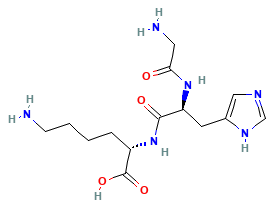
GHK-Cu
Copper tripeptide-1. Tissue regeneration studies.
CAS 49557-75-7
50mg vial · In stock
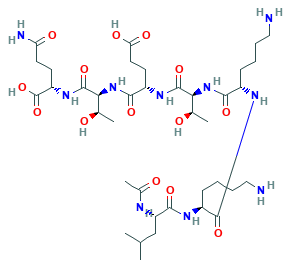
TB-500
Thymosin β4 fragment. Actin-binding domain active.
CAS 885340-08-9
5mg vial · In stock
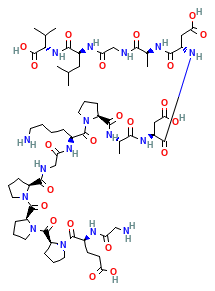
BPC-157
Pentadecapeptide. Gastric pentadecapeptide research.
CAS 137525-51-0
5mg vial · In stock
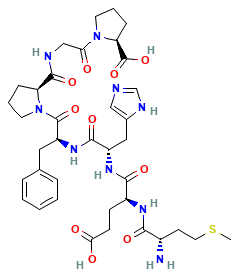
Semax
Nootropic heptapeptide. ACTH 4-10 analog.
CAS 80714-61-0
10mg vial · In stock
For laboratory research use only