How to Read a Peptide COA: A Field Guide for Researchers
Research compounds for laboratory use only · not medical advice
Every block on a peptide certificate of analysis, what each assay actually measures, and the eight checks that separate a usable COA from a decorative one — with a worked example.
A COA is one page that can contain three honest numbers or five elegant fictions. Here is how to tell which you’re holding — block by block.
The anatomy of a real certificate
Header — who, what, when. Compound name, CAS, batch/lot code, synthesis or purification date, report date. The batch code must match your vial label exactly; the dates must be chronologically possible. Decorative COAs fail here surprisingly often.
Identity — usually LC-MS or MALDI. Expect an “m/z found vs calculated” pair. For GHK-Cu the found mass should sit near the copper-free peptide’s calculated mass plus the metal adduct — if you can compute expected mass with the MW calculator, you can check their arithmetic in 30 seconds.
Purity — HPLC area%. Read the method: gradient, column class, detection wavelength (214 or 220 nm for peptide bonds). A bare “99%” with no method line is marketing. Peptides with Cys residues, salts, or acetate counter-ions legitimately report lower area% — ask which.
Water and residue content. Lyophilized powder is never 100% solid: 5–10% residual water and TFA/acetate salts are normal. Good COAs report them (Karl Fischer or qNMR notes); the number explains why vial “mass” and pure-peptide mass differ — the exact accounting trap covered in our reconstitution guide.
Sign-off. A lab name, location, and analyst reference that exist when you look them up.
The eight-point checklist
- Batch code matches the vial in your hand
- Found vs calculated mass, both printed
- HPLC method line present (column/gradient/λ)
- Purity consistent with the compound’s difficulty (no universal 99.9%)
- Water/salt content disclosed
- Dates chronologically sane
- Issuing lab identifiable and findable
- Numbers reproducible from your own MW math
Any two of these missing and the document is a sales sheet. Our quality process page states exactly what each Vyroval batch ships with — including what we don’t test for, which is the line most COA marketing quietly omits.
For laboratory research use only. Not medical advice.
FAQ
Frequently asked questions
What is a COA?
A Certificate of Analysis: the per-batch document reporting identity and purity testing for the exact lot being shipped — typically MS or HPLC data with numeric results and instrument method references.
What purity number is realistic for lyophilized research peptides?
98–99.5% on HPLC is normal for well-made crude-purified peptides; claims of >99.5% on every batch of every long peptide are a flag, not a feature — purification recovery realistically varies.
HPLC versus MS: which matters more?
They answer different questions and neither substitutes for the other. MS confirms the molecule's mass; HPLC area% quantifies how much of the dry weight is that molecule. A complete COA carries both.
What is the single most-faked thing on a COA?
Batch-number linkage: a document whose batch code doesn't appear on the vial label, or whose date predates the stated synthesis, is decorative. Cross-check batch, date, and the mass value against your own MW calculation for the sequence.
Keep reading
Related articles
AOD-9604: The hGH Fragment 177-191 Lipolytic Peptide
AOD-9604, the synthetic analog of hGH fragment 177-191, and its research in lipolysis, fat metabolism and growth-hormone fragment pharmacology.
BPC-157 Dosage and Reconstitution Math: 5 mg Vial in the Lab
BPC-157 vial math — reconstituting a 5 mg lyophilized vial, mg to mL and U-100 unit conversions, and common research dose ranges.
CJC-1295 No DAC (Mod GRF 1-29): The Short-Acting GHRH Analog
CJC-1295 No DAC (Modified GRF 1-29), the tetrasubstituted GHRH analog with DPP-IV resistance, and its research in GH-secretagogue and pulsatility studies.
Laboratory tools
Put it into practice
From the catalog
Reference compounds
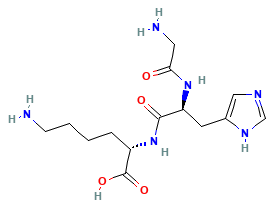
GHK-Cu
Copper tripeptide-1. Tissue regeneration studies.
CAS 49557-75-7
50mg vial · In stock
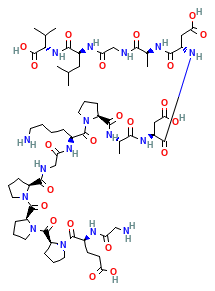
BPC-157
Pentadecapeptide. Gastric pentadecapeptide research.
CAS 137525-51-0
5mg vial · In stock
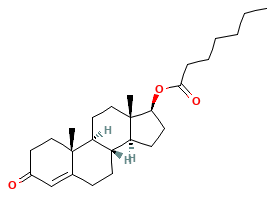
Testosterone Enanthate
Long-ester testosterone. 250mg/mL in USP-grade carrier oil.
CAS 315-37-7
10mL vial · In stock
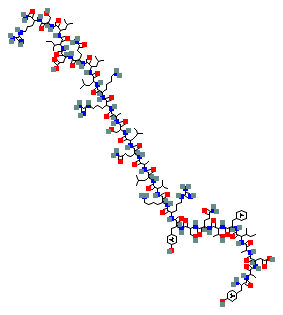
CJC-1295 No DAC
GHRH analog (Mod GRF 1-29). GH secretagogue research.
CAS 863288-34-0
5mg vial · In stock
For laboratory research use only