CJC-1295 + Ipamorelin: The Classic GH-Axis Pair, in Vial Math
Research compounds for laboratory use only · not medical advice
Why a GHRH analog and a selective secretagogue are stacked, what each contributes at the receptor, and how the two vials' reconstitution math actually works day to day.
The most-referenced peptide stack in GH-axis research is really two molecules doing two jobs — and two vial calculations, not one.
What each half contributes
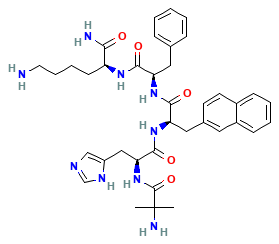
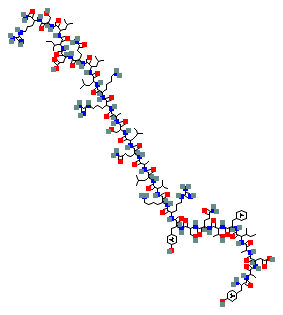
CJC-1295 (no DAC) is a growth-hormone-releasing-hormone analog — the full 1-29 sequence without the drug affinity complex, studied for its short-acting pulse on the GHRH receptor. Ipamorelin is the selective ghrelin-mimetic pentapeptide on GHS-R1a, known in comparative secretagogue work for a cleaner cortisol/prolactin side profile than the older GHRPs (context in the GHRP-6 guide and the ipamorelin vs HGH comparison).
One raises the release instruction; the other tunes the pituitary’s readiness to obey. That complementarity — not redundancy — is why protocols measure them together.
The daily math, done properly
Each vial gets its own bacteriostatic-water dilution and its own calculator run:
| Component | Vial | At 2 mL BAC | A 10-unit draw carries |
|---|---|---|---|
| CJC-1295 (no DAC) | 2 mg | 1.0 mg/mL | 100 µg |
| Ipamorelin | 5 mg | 2.5 mg/mL | 250 µg |
Use the reconstitution calculator per vial, the U-100 converter for the syringe column. Both peptides ship lyophilized, stored −20 °C cold after reconstitution; handling steps are identical to the single-peptide protocol.
When a fixed blend is acceptable
Wholesale code sheets carry the pair pre-mixed (codes “CJIPA”-style) for convenience vials; the same 1:1-ratio tradeoff discussed in the BPC+TB blend guide applies — locked ratios simplify handling, sacrifice dosing independence.
For laboratory research use only. Not medical advice.
FAQ
Frequently asked questions
Why stack CJC-1295 with Ipamorelin at all?
Two different receptors on one axis: CJC-1295 (no DAC) is a GHRH-receptor analog that raises the release signal; Ipamorelin is a GHS-R1a agonist that primes the pituitary. Studied together because the secretory output depends on both inputs — the pairing has been the default GH-axis stack in research protocols since the mid-2000s.
One vial or two?
In our catalog, two separate vials (2 mg CJC, 5 mg Ipa). Reconstitute each on its own schedule and draw each dose separately; blended 'combo' vials exist in wholesale code sheets but fix the mass ratio, which this stack usually does not want.
Does the DAC version change the math?
Yes, pharmacokinetically: the original CJC-1295 with DAC carries albumin-binding extensions and a much longer apparent half-life — the no-DAC (Mod GRF 1-29) form in our catalog is the short-acting one matched to pulsed dosing.
What do the two reconstitution calculations look like?
Same form, different numbers: vial mass ÷ BAC water volume gives each concentration independently. At 2 mg in 2 mL, CJC reads 1 mg/mL; at 5 mg in 2 mL, Ipa reads 2.5 mg/mL — same 0.1 mL draw carries 100 µg vs 250 µg. The calculator runs both.
Keep reading
Related articles
BPC-157 Dosage and Reconstitution Math: 5 mg Vial in the Lab
BPC-157 vial math — reconstituting a 5 mg lyophilized vial, mg to mL and U-100 unit conversions, and common research dose ranges.
GHK-Cu: The Copper Tripeptide, from Structure to Vial Math
What GHK-Cu is, what the copper atom changes, how the 50 mg vial reconstitutes, and why its molecular weight matters for molar work.
GHK-Cu Reconstitution and Vial Math: 50 mg Copper Peptide in the Lab
GHK-Cu (CU50) vial math — reconstituting a 50 mg copper tripeptide vial, mg to mL conversions, and the concentrations used in cell-culture work.
Laboratory tools
Put it into practice
From the catalog
Reference compounds
HGH 191aa
Recombinant human growth hormone. Full 191aa sequence.
CAS 12629-01-5
10IU vial · In stock
Ipamorelin
Selective GH secretagogue pentapeptide.
CAS 170851-70-4
5mg vial · In stock

Bacteriostatic Water
0.9% benzyl alcohol, sterile USP-grade solvent.
CAS 7732-18-5
10mL vial · In stock
CJC-1295 No DAC
GHRH analog (Mod GRF 1-29). GH secretagogue research.
CAS 863288-34-0
5mg vial · In stock
For laboratory research use only