GHK-Cu: The Copper Tripeptide, from Structure to Vial Math
Research compounds for laboratory use only · not medical advice
What GHK-Cu is, what the copper atom changes, how the 50 mg vial reconstitutes, and why its molecular weight matters for molar work.
GHK-Cu is one of the smallest peptides in the catalog — three amino acids plus a copper ion. Researchers usually come to it for one of two reasons: the copper biochemistry, or the reconstitution math on a 50 mg vial. This guide covers both.
What the molecule is
GHK-Cu is the copper complex of glycine-histidine-lysine, a tripeptide first identified in human blood plasma. The full complex formula is C₁₄H₂₄N₆O₄Cu — and that copper atom is not decorative. The literature treats GHK and GHK-Cu as distinct subjects: the copper complex is the one referenced in fibroblast activity, collagen synthesis, and wound-repair pathway models.
The molecular weight works out to about 403.9 g/mol. It’s small, which matters when a protocol specifies molar concentrations — the calculator handles the formula directly.
Reconstituting the 50 mg vial
The 50 mg vial is the largest lyophilized peptide we carry, and that changes the numbers people expect:
- 50 mg = 50,000 µg
- With 2 mL bacteriostatic water: 25,000 µg/mL — each 0.1 mL holds 2,500 µg
- A 1,000 µg target dose = 40 µL = 4 units on a U-100 syringe
- With 5 mL water: 10,000 µg/mL, and the same 1,000 µg dose = 100 µL = 10 units
The reconstitution calculator has the GHK-Cu preset at 50 mg, so no mental math needed — but running it both ways is a good habit for double-checking lab work.
Regulatory status (2026)
GHK-Cu has the most turbulent file in the catalog: nominated, placed on the 503A Category 2 safety-risk list, and by April 2026 removed from both categorical lists — outside Category 1 and Category 2 while the FDA re-evaluates its compounding applications, with a February 2027 PCAC review on the calendar. Topical and injectable research contexts carry different regulatory weight. Track the queue in the 2026 regulatory timeline.
Practical handling
Lyophilized GHK-Cu stores at −20 °C; reconstituted solutions go in the refrigerator and follow the Certificate of Analysis window. The copper can tint a solution faintly blue at higher concentrations — a harmless physical property, not a sign of degradation, though it’s worth knowing so it doesn’t surprise a protocol log.
See GHK-Cu for purity (99.7%) and full specifications.
For laboratory research use only. Not medical advice.
Last updated September 9, 2026
FAQ
Frequently asked questions
What is GHK-Cu exactly?
GHK-Cu (copper tripeptide-1) is the naturally occurring copper complex of the glycine-histidine-lysine tripeptide, studied in fibroblast activity, collagen synthesis and wound-repair models.
How do I reconstitute the 50 mg vial?
The 50 mg vial works like any lyophilized peptide: add bacteriostatic water, divide by volume for concentration. 2 mL gives 25,000 µg/mL; a 1,000 µg dose is 40 µL (4 units on U-100).
Why is the copper important?
The copper ion is part of the peptide's reported activity profile — the tripeptide without copper (GHK) behaves differently in the literature, which is why the complex is specified.
Keep reading
Related articles
BPC-157 Dosage and Reconstitution Math: 5 mg Vial in the Lab
BPC-157 vial math — reconstituting a 5 mg lyophilized vial, mg to mL and U-100 unit conversions, and common research dose ranges.
GHK-Cu Reconstitution and Vial Math: 50 mg Copper Peptide in the Lab
GHK-Cu (CU50) vial math — reconstituting a 50 mg copper tripeptide vial, mg to mL conversions, and the concentrations used in cell-culture work.
HGH 191aa: The Full-Length Recombinant Hormone
The 191-amino-acid somatropin, why it's measured in IU not mg, and how the 10 IU vial reconstitutes for research.
Laboratory tools
Put it into practice
From the catalog
Reference compounds
HGH 191aa
Recombinant human growth hormone. Full 191aa sequence.
CAS 12629-01-5
10IU vial · In stock
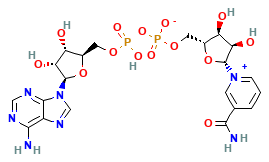
NAD+
Nicotinamide adenine dinucleotide. Cellular metabolism studies.
CAS 53-84-9
500mg vial · In stock
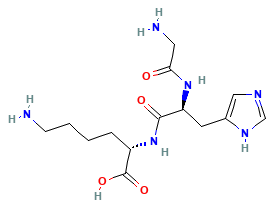
GHK-Cu
Copper tripeptide-1. Tissue regeneration studies.
CAS 49557-75-7
50mg vial · In stock
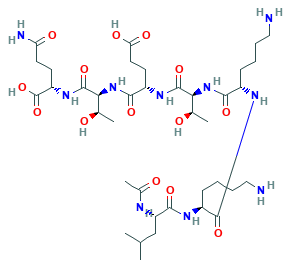
TB-500
Thymosin β4 fragment. Actin-binding domain active.
CAS 885340-08-9
5mg vial · In stock
For laboratory research use only