SS-31 (Elamipretide): Mitochondria-Targeted Tetrapeptide
Research compounds for laboratory use only · not medical advice
SS-31, the Szeto-Schiller cardiolipin-binding tetrapeptide, and its research in mitochondrial bioenergetics, ROS and ischemia-reperfusion models.
Most peptides have to find a receptor. SS-31 works differently: it is built to cross membranes freely and then bind the one lipid that lives almost exclusively in the inner mitochondrial membrane. That single design decision defines its research profile.
The molecule
SS-31 (elamipretide, C₃₂H₄₉N₉O₅, ≈ 640 g/mol) belongs to the Szeto-Schiller family of tetrapeptides. Its alternating aromatic–cationic amino acid sequence (D-Arg-Dmt-Lys-Phe-NH₂) allows it to penetrate cell and mitochondrial membranes without requiring a transport protein. Once inside, it binds cardiolipin, the phospholipid that anchors electron-transport-chain complexes and cytochrome c to the inner membrane.
Why it’s studied
Binding cardiolipin is not just localization — it is mechanistically relevant:
- Mitochondrial bioenergetics — cardiolipin organizes respiratory supercomplexes; SS-31 research examines whether binding preserves complex function under stress
- ROS and oxidative-stress models — the cardiolipin–cytochrome c interaction is a node in electron-transport efficiency and reactive oxygen production
- Ischemia-reperfusion injury — where mitochondrial permeability transition during reperfusion is a central event
- Age-related mitochondrial decline — a recurring theme given cardiolipin content drops in aging tissue
Szeto’s 2006 review in The AAPS Journal is a standard entry point for the family’s mechanism.
Handling notes
Lyophilized, reconstitute with bacteriostatic water; the reconstitution calculator does the math. Store at −20°C lyophilized.
See SS-31 for CAS, purity and full specifications.
For laboratory research use only. Not medical advice.
Last updated September 9, 2026
FAQ
Frequently asked questions
What is SS-31?
SS-31 (elamipretide) is a cell-permeable, mitochondria-targeted tetrapeptide from the Szeto-Schiller family. It selectively binds cardiolipin on the inner mitochondrial membrane.
What research uses SS-31?
It is studied in mitochondrial bioenergetics, reactive-oxygen-species (ROS) research, ischemia-reperfusion injury models, and cardiolipin–cytochrome c interaction studies.
Why does SS-31 target mitochondria?
Its alternating aromatic-cationic structure lets it cross membranes without a transporter, and its affinity for cardiolipin — a lipid almost exclusive to the inner mitochondrial membrane — gives it mitochondrial selectivity.
Keep reading
Related articles
AOD-9604: The hGH Fragment 177-191 Lipolytic Peptide
AOD-9604, the synthetic analog of hGH fragment 177-191, and its research in lipolysis, fat metabolism and growth-hormone fragment pharmacology.
BPC-157 Dosage and Reconstitution Math: 5 mg Vial in the Lab
BPC-157 vial math — reconstituting a 5 mg lyophilized vial, mg to mL and U-100 unit conversions, and common research dose ranges.
CJC-1295 No DAC (Mod GRF 1-29): The Short-Acting GHRH Analog
CJC-1295 No DAC (Modified GRF 1-29), the tetrasubstituted GHRH analog with DPP-IV resistance, and its research in GH-secretagogue and pulsatility studies.
Laboratory tools
Put it into practice
From the catalog
Reference compounds
HGH 191aa
Recombinant human growth hormone. Full 191aa sequence.
CAS 12629-01-5
10IU vial · In stock
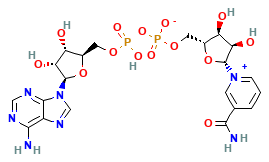
NAD+
Nicotinamide adenine dinucleotide. Cellular metabolism studies.
CAS 53-84-9
500mg vial · In stock
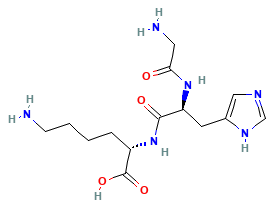
GHK-Cu
Copper tripeptide-1. Tissue regeneration studies.
CAS 49557-75-7
50mg vial · In stock
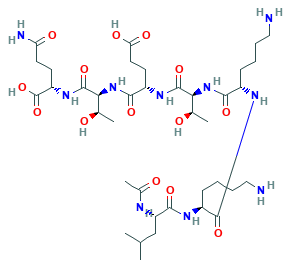
TB-500
Thymosin β4 fragment. Actin-binding domain active.
CAS 885340-08-9
5mg vial · In stock
For laboratory research use only