Sermorelin: GHRH 1-29 for GH-Axis Reference Research
Research compounds for laboratory use only · not medical advice
Sermorelin, the 29-amino-acid GHRH fragment, and its use as a reference standard in GHRH-receptor binding, GH pulsatility and GH-axis pharmacology.
Sermorelin answers a structural question: how much of the growth-hormone-releasing hormone molecule is actually needed for receptor activity? The answer the research settled on is the first 29 residues — and that fragment became a reference standard in its own right.
The molecule
Sermorelin is GHRH 1-29 NH2 (C₁₄₉H₂₄₆N₄₄O₄₂S, ≈ 3358 g/mol) — the N-terminal 29 amino acids of human GHRH. Studies established that this portion carries the receptor-active region of the full 44-mer, which is why it is studied both as an analog and as a structural reference point.
What the research looks at
- GHRH-receptor binding assays — a standard comparator for the GHRH receptor
- Pulsatile GH secretion — how GHRH-R signaling shapes the amplitude and timing of growth-hormone pulses
- GH-axis pharmacology — baseline reference for comparing longer or modified analogs
How it fits the GHRH family
Sermorelin is the reference fragment; Tesamorelin is the stabilized full 44-mer, and CJC-1295 No DAC (Mod GRF 1-29) is the same 29-mer with four substitutions for DPP-IV resistance. Reading the three side by side is a clean illustration of how length and substitutions trade off against stability in GHRH research.
Handling notes
Lyophilized, reconstitute with bacteriostatic water; the reconstitution calculator handles the math. Store at −20°C lyophilized.
See Sermorelin for CAS, purity and full specifications.
For laboratory research use only. Not medical advice.
Last updated September 9, 2026
FAQ
Frequently asked questions
What is Sermorelin?
Sermorelin is the 29-amino-acid N-terminal fragment of human growth-hormone-releasing hormone (GHRH 1-29 NH2), carrying the receptor-active portion of the full molecule.
What research uses Sermorelin?
GHRH-receptor binding assays, pulsatile growth-hormone secretion research, and GH-axis pharmacology studies, where it serves as a reference standard.
Why 29 amino acids instead of 44?
The first 29 residues of GHRH retain receptor-binding activity; the remaining C-terminal sequence contributes to stability rather than receptor activation, so the fragment is studied on its own.
Keep reading
Related articles
AOD-9604: The hGH Fragment 177-191 Lipolytic Peptide
AOD-9604, the synthetic analog of hGH fragment 177-191, and its research in lipolysis, fat metabolism and growth-hormone fragment pharmacology.
BPC-157 Dosage and Reconstitution Math: 5 mg Vial in the Lab
BPC-157 vial math — reconstituting a 5 mg lyophilized vial, mg to mL and U-100 unit conversions, and common research dose ranges.
CJC-1295 No DAC (Mod GRF 1-29): The Short-Acting GHRH Analog
CJC-1295 No DAC (Modified GRF 1-29), the tetrasubstituted GHRH analog with DPP-IV resistance, and its research in GH-secretagogue and pulsatility studies.
Laboratory tools
Put it into practice
From the catalog
Reference compounds
HGH 191aa
Recombinant human growth hormone. Full 191aa sequence.
CAS 12629-01-5
10IU vial · In stock
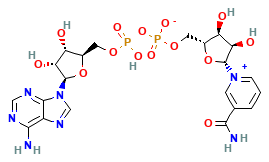
NAD+
Nicotinamide adenine dinucleotide. Cellular metabolism studies.
CAS 53-84-9
500mg vial · In stock
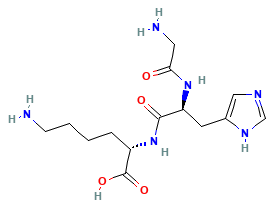
GHK-Cu
Copper tripeptide-1. Tissue regeneration studies.
CAS 49557-75-7
50mg vial · In stock
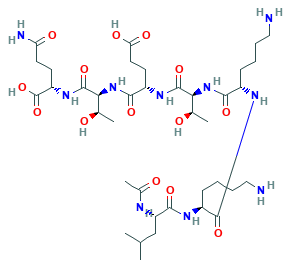
TB-500
Thymosin β4 fragment. Actin-binding domain active.
CAS 885340-08-9
5mg vial · In stock
For laboratory research use only