Semax: The ACTH 4-10 Cognitive Heptapeptide
Research compounds for laboratory use only · not medical advice
Semax (Met-Glu-His-Phe-Pro-Gly-Pro) and its research in cognitive enhancement, BDNF signaling, and as a reference compound in peptide-based CNS pharmacology.
Semax is the cognitive side of the best-known Russian research-peptide pair. Where Selank grew from an immune peptide’s sequence, Semax grew from a hormone fragment — and it was deliberately modified to last longer than the natural molecule it came from.
The molecule
Semax is the heptapeptide Met-Glu-His-Phe-Pro-Gly-Pro (C₃₇H₅₁N₉O₁₀S, ≈ 814 g/mol), an analog of the ACTH 4-10 fragment. The natural fragment is short-lived; Semax was engineered for stability, which is what turned a transient hormone fragment into a research compound with a workable half-life.
What the research looks at
Semax appears in three main threads:
- Cognitive-enhancement and nootropic research — learning and memory behavioral models are the core of its literature
- BDNF signaling — brain-derived neurotrophic factor pathways are a recurring mechanistic focus, connecting peptide treatment to synaptic plasticity
- Neuroprotection — studied alongside its cognitive effects in models of CNS stress and damage
It is frequently paired with Selank in cognitive-panel research — the two share a design lineage but target different ends of the behavioral spectrum.
Handling notes
Lyophilized, reconstitute with bacteriostatic water; the reconstitution calculator does the liquid math. Store at −20°C lyophilized.
See Semax for CAS, purity and full specifications.
For laboratory research use only. Not medical advice.
Last updated September 9, 2026
FAQ
Frequently asked questions
What is Semax?
Semax is a synthetic heptapeptide analog of the ACTH 4-10 fragment (Met-Glu-His-Phe-Pro-Gly-Pro) with a prolonged action profile, developed in Russia as a nootropic research peptide.
What research uses Semax?
Cognitive-enhancement and nootropic research, neuroprotection and brain-derived neurotrophic factor (BDNF) signaling, and peptide-based CNS pharmacology studies.
How does Semax differ from Selank?
Semax is the cognitive/enhancement-oriented peptide of the pair, while Selank is the anxiolytic-oriented one. Both descend from different natural sequences and are often studied together.
Keep reading
Related articles
AOD-9604: The hGH Fragment 177-191 Lipolytic Peptide
AOD-9604, the synthetic analog of hGH fragment 177-191, and its research in lipolysis, fat metabolism and growth-hormone fragment pharmacology.
BPC-157 Dosage and Reconstitution Math: 5 mg Vial in the Lab
BPC-157 vial math — reconstituting a 5 mg lyophilized vial, mg to mL and U-100 unit conversions, and common research dose ranges.
CJC-1295 No DAC (Mod GRF 1-29): The Short-Acting GHRH Analog
CJC-1295 No DAC (Modified GRF 1-29), the tetrasubstituted GHRH analog with DPP-IV resistance, and its research in GH-secretagogue and pulsatility studies.
Laboratory tools
Put it into practice
From the catalog
Reference compounds
HGH 191aa
Recombinant human growth hormone. Full 191aa sequence.
CAS 12629-01-5
10IU vial · In stock
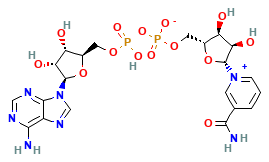
NAD+
Nicotinamide adenine dinucleotide. Cellular metabolism studies.
CAS 53-84-9
500mg vial · In stock
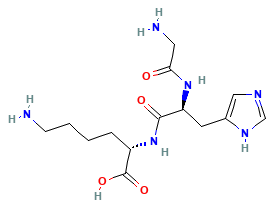
GHK-Cu
Copper tripeptide-1. Tissue regeneration studies.
CAS 49557-75-7
50mg vial · In stock
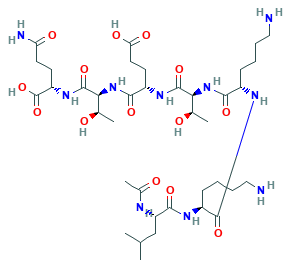
TB-500
Thymosin β4 fragment. Actin-binding domain active.
CAS 885340-08-9
5mg vial · In stock
For laboratory research use only