NAD+: The Redox Coenzyme and Its 500 mg Vial
Research compounds for laboratory use only · not medical advice
What NAD+ does in cellular metabolism research, why the 500 mg vial reconstitutes differently, and the concentration math researchers actually need.
NAD+ sits at the metabolic center of the catalog — literally. Nicotinamide adenine dinucleotide is the redox coenzyme every energy-metabolism study eventually touches, and its vial is a different scale from the peptides around it.
What the molecule is
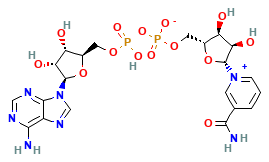
NAD+ (C₂₁H₂₇N₇O₁₄P₂, ≈ 663 g/mol) is the oxidized form of the coenzyme that shuttles electrons in hundreds of cellular reactions. Research references concentrate on mitochondrial function, sirtuin activation, and cellular energy metabolism — the pathways that make NAD+ a fixture in aging and metabolic research protocols.
The 500 mg vial is a different game
Most lyophilized products here are 5–10 mg. NAD+ ships at 500 mg, which trips up researchers used to microgram math:
- 500 mg = 500,000 µg
- Reconstitute with 10 mL bacteriostatic water → 50,000 µg/mL
- A 250 mg dose = 5 mL — this is a syringe-and-filter job, not an insulin draw
That’s why the ancillaries section exists: PTFE syringe filters and sterile empty vials are the standard companions when splitting a 500 mg reconstitution into working aliquots.
Aliquoting math
A common workflow is reconstituting then splitting into per-day vials:
- Reconstitute 500 mg in 10 mL → 50 mg/mL stock
- Want 5 mL aliquots at 25 mg/mL? Use the dilution calculator: 2.5 mL stock + 2.5 mL bacteriostatic water per vial
- Store aliquots refrigerated per the Certificate of Analysis
The reconstitution calculator handles the initial concentration step with the NAD+ preset; the dilution calculator takes over when you split.
Practical notes
NAD+ is water-soluble and lyophilized for −20 °C storage. We get asked whether it can be reconstituted at higher volumes for infusion work — the product page lists solubility as water, and the stability window follows the COA. See NAD+ for full specifications.
For laboratory research use only. Not medical advice.
Last updated September 9, 2026
FAQ
Frequently asked questions
What is NAD+ used for in research?
NAD+ (nicotinamide adenine dinucleotide) is the essential redox coenzyme studied in mitochondrial function, sirtuin activation and cellular energy metabolism.
How do I reconstitute the 500 mg vial?
It follows the same math as any lyophilized compound: concentration = 500,000 µg ÷ water volume. 10 mL water gives 50,000 µg/mL; a 250,000 µg (250 mg) dose is 5 mL.
Why is the vial so much bigger than the peptides?
NAD+ doses in research protocols are commonly in the hundreds of milligrams, not micrograms — so the vial is sized accordingly. The molecular weight is also small (≈ 663 g/mol).
Keep reading
Related articles
BPC-157 Dosage and Reconstitution Math: 5 mg Vial in the Lab
BPC-157 vial math — reconstituting a 5 mg lyophilized vial, mg to mL and U-100 unit conversions, and common research dose ranges.
GHK-Cu: The Copper Tripeptide, from Structure to Vial Math
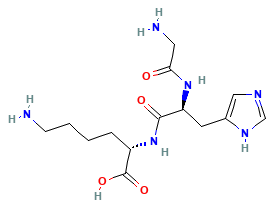
What GHK-Cu is, what the copper atom changes, how the 50 mg vial reconstitutes, and why its molecular weight matters for molar work.
GHK-Cu Reconstitution and Vial Math: 50 mg Copper Peptide in the Lab
GHK-Cu (CU50) vial math — reconstituting a 50 mg copper tripeptide vial, mg to mL conversions, and the concentrations used in cell-culture work.
Laboratory tools
Put it into practice
From the catalog
Reference compounds
HGH 191aa
Recombinant human growth hormone. Full 191aa sequence.
CAS 12629-01-5
10IU vial · In stock
NAD+
Nicotinamide adenine dinucleotide. Cellular metabolism studies.
CAS 53-84-9
500mg vial · In stock
GHK-Cu
Copper tripeptide-1. Tissue regeneration studies.
CAS 49557-75-7
50mg vial · In stock
TB-500
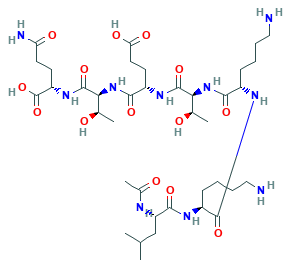
Thymosin β4 fragment. Actin-binding domain active.
CAS 885340-08-9
5mg vial · In stock
For laboratory research use only