Melanotan II: The Non-Selective Melanocortin Agonist
Research compounds for laboratory use only · not medical advice
Melanotan II, the cyclic α-MSH analog, and its research in melanocortin receptor pharmacology, melanogenesis and appetitive-behavior models.
Melanotan II is a designed molecule: a synthetic cyclic analog of α-melanocyte-stimulating hormone built to be more stable and more potent than the natural peptide. Its research value comes from the fact that it hits the whole melanocortin receptor family, not just one member.
The molecule
Melanotan II (C₅₀H₆₉N₁₅O₉, ≈ 1024 g/mol) is a cyclic lactam analog of α-MSH. The cyclization confers stability against enzymatic degradation — a standard design move that transformed a short-lived native peptide into a research-stable agonist. It acts across the melanocortin receptors MC1R–MC5R.
What the research looks at
- Melanogenesis and pigmentation — MC1R-driven pigment research, the original thread
- MC-receptor pharmacology — non-selective agonism makes it a useful reference for receptor-subtype studies
- Appetitive and behavioral pathways — melanocortin signaling extends beyond pigment to energy and behavior
Its scaffold also produced PT-141, a derivative engineered for MC4R selectivity.
Handling notes
Lyophilized, reconstitute with bacteriostatic water; the reconstitution calculator handles the math. Store at −20°C lyophilized, protect from light.
See Melanotan II for CAS, purity and full specifications.
For laboratory research use only. Not medical advice.
Last updated September 9, 2026
FAQ
Frequently asked questions
What is Melanotan II?
Melanotan II is a synthetic cyclic lactam analog of α-melanocyte-stimulating hormone (α-MSH) that acts as a non-selective melanocortin receptor (MC1R-MC5R) agonist.
What research uses Melanotan II?
Melanogenesis and pigmentation research, MC-receptor pharmacology, and appetitive-behavior pathway models.
How does Melanotan II relate to PT-141?
PT-141 (bremelanotide) is derived from Melanotan II — the same scaffold, modified for selectivity toward the MC4 receptor.
Keep reading
Related articles
AOD-9604: The hGH Fragment 177-191 Lipolytic Peptide
AOD-9604, the synthetic analog of hGH fragment 177-191, and its research in lipolysis, fat metabolism and growth-hormone fragment pharmacology.
BPC-157 Dosage and Reconstitution Math: 5 mg Vial in the Lab
BPC-157 vial math — reconstituting a 5 mg lyophilized vial, mg to mL and U-100 unit conversions, and common research dose ranges.
CJC-1295 No DAC (Mod GRF 1-29): The Short-Acting GHRH Analog
CJC-1295 No DAC (Modified GRF 1-29), the tetrasubstituted GHRH analog with DPP-IV resistance, and its research in GH-secretagogue and pulsatility studies.
Laboratory tools
Put it into practice
From the catalog
Reference compounds
HGH 191aa
Recombinant human growth hormone. Full 191aa sequence.
CAS 12629-01-5
10IU vial · In stock
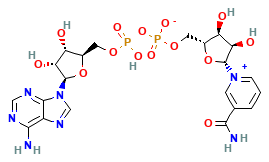
NAD+
Nicotinamide adenine dinucleotide. Cellular metabolism studies.
CAS 53-84-9
500mg vial · In stock
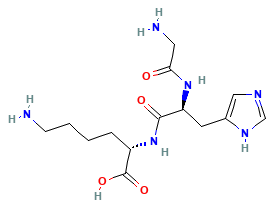
GHK-Cu
Copper tripeptide-1. Tissue regeneration studies.
CAS 49557-75-7
50mg vial · In stock
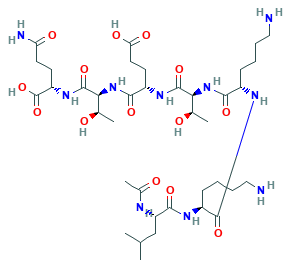
TB-500
Thymosin β4 fragment. Actin-binding domain active.
CAS 885340-08-9
5mg vial · In stock
For laboratory research use only