L-Carnitine: The Fatty-Acid Transport Cofactor in Research
Research compounds for laboratory use only · not medical advice
L-carnitine, the quaternary ammonium compound essential for mitochondrial fatty-acid transport, and its research in lipid metabolism and bioenergetics.
L-carnitine is not a peptide — it is a small molecule with a big job: it is the shuttle that moves long-chain fatty acids across the mitochondrial membrane so they can be oxidized. Every cell-culture experiment that touches fatty-acid metabolism eventually meets carnitine.
The molecule
L-carnitine (C₇H₁₅NO₃, ≈ 161 g/mol) is a quaternary ammonium compound. Its biological role is shuttling long-chain fatty acids into the mitochondrial matrix for β-oxidation via the carnitine shuttle — a mechanism that makes it foundational to lipid-metabolism and mitochondrial research.
What the research looks at
- Lipid metabolism — fatty-acid transport and oxidation pathways
- Mitochondrial bioenergetics — where carnitine’s shuttle role intersects ATP production
- Cell-culture supplementation — a common additive in metabolic assays
Its redox-adjacent partner in supplementation research is Glutathione.
Handling notes
Lyophilized powder, water soluble. Store at room temperature in a dry environment.
See L-Carnitine for CAS, purity and full specifications.
For laboratory research use only. Not medical advice.
Last updated September 9, 2026
FAQ
Frequently asked questions
What is L-Carnitine?
L-carnitine is a quaternary ammonium compound essential for transporting long-chain fatty acids across the mitochondrial membrane for β-oxidation.
What research uses L-Carnitine?
Lipid-metabolism research, mitochondrial bioenergetics, and metabolic-supplementation formulations for cell-culture work.
Is L-Carnitine a peptide?
No — it is a small quaternary ammonium molecule (C7H15NO3). It is grouped with research compounds because of its central role in mitochondrial metabolism.
Keep reading
Related articles
AOD-9604: The hGH Fragment 177-191 Lipolytic Peptide
AOD-9604, the synthetic analog of hGH fragment 177-191, and its research in lipolysis, fat metabolism and growth-hormone fragment pharmacology.
BPC-157 Dosage and Reconstitution Math: 5 mg Vial in the Lab
BPC-157 vial math — reconstituting a 5 mg lyophilized vial, mg to mL and U-100 unit conversions, and common research dose ranges.
CJC-1295 No DAC (Mod GRF 1-29): The Short-Acting GHRH Analog
CJC-1295 No DAC (Modified GRF 1-29), the tetrasubstituted GHRH analog with DPP-IV resistance, and its research in GH-secretagogue and pulsatility studies.
Laboratory tools
Put it into practice
From the catalog
Reference compounds
HGH 191aa
Recombinant human growth hormone. Full 191aa sequence.
CAS 12629-01-5
10IU vial · In stock
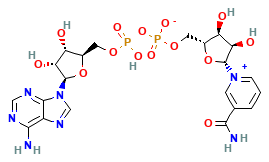
NAD+
Nicotinamide adenine dinucleotide. Cellular metabolism studies.
CAS 53-84-9
500mg vial · In stock
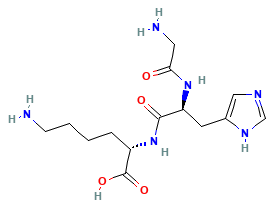
GHK-Cu
Copper tripeptide-1. Tissue regeneration studies.
CAS 49557-75-7
50mg vial · In stock
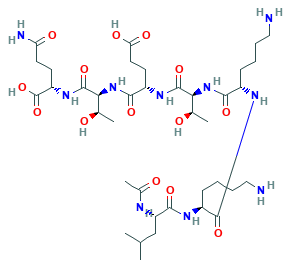
TB-500
Thymosin β4 fragment. Actin-binding domain active.
CAS 885340-08-9
5mg vial · In stock
For laboratory research use only