Ipamorelin: The Selective GH Secretagogue
Research compounds for laboratory use only · not medical advice
What ipamorelin is, how it differs from full-length HGH, and the 5 mg vial reconstitution math for GH-axis research.
Ipamorelin sits in a different category from most of the catalog: it’s not a hormone, it’s a signal — a pentapeptide that tells the pituitary to release the body’s own growth hormone.
The molecule
Ipamorelin (C₃₈H₄₉N₉O₅, ≈ 712 g/mol) is a ghrelin-mimetic designed for high selectivity at the growth-hormone secretagogue receptor (GHS-R). Where full-length HGH is the final product of the GH axis, ipamorelin works one step earlier — stimulating endogenous release. That’s the distinction researchers care about, and it’s covered in depth in the Ipamorelin vs HGH 191aa comparison.
Reconstitution
The 5 mg vial follows standard peptide math:
- 5 mg = 5,000 µg
- 2 mL bacteriostatic water → 2,500 µg/mL
- A 250 µg dose = 10 units on a U-100 syringe
The reconstitution calculator has the ipamorelin preset. Storage is −20 °C lyophilized, 2–8 °C after reconstitution per the COA.
Research context
As a selective GHS-R agonist, ipamorelin appears in receptor selectivity and GH pulse dynamics research. See Ipamorelin for CAS, purity and full specifications.
For laboratory research use only. Not medical advice.
Last updated September 9, 2026
FAQ
Frequently asked questions
What is ipamorelin?
Ipamorelin is a highly selective ghrelin-mimetic pentapeptide that stimulates the growth-hormone secretagogue receptor (GHS-R) — a secretagogue, not the hormone itself.
How does it differ from HGH 191aa?
Ipamorelin amplifies the body's own GH release pattern; HGH 191aa is the full 191-amino-acid hormone. They act at different points of the GH axis — see the comparison article.
How do I reconstitute the 5 mg vial?
Standard math: 5,000 µg ÷ water volume gives µg/mL. 2 mL gives 2,500 µg/mL; a 250 µg dose is 10 units on U-100.
Keep reading
Related articles
BPC-157 Dosage and Reconstitution Math: 5 mg Vial in the Lab
BPC-157 vial math — reconstituting a 5 mg lyophilized vial, mg to mL and U-100 unit conversions, and common research dose ranges.
GHK-Cu: The Copper Tripeptide, from Structure to Vial Math
What GHK-Cu is, what the copper atom changes, how the 50 mg vial reconstitutes, and why its molecular weight matters for molar work.
GHK-Cu Reconstitution and Vial Math: 50 mg Copper Peptide in the Lab
GHK-Cu (CU50) vial math — reconstituting a 50 mg copper tripeptide vial, mg to mL conversions, and the concentrations used in cell-culture work.
Laboratory tools
Put it into practice
From the catalog
Reference compounds
HGH 191aa
Recombinant human growth hormone. Full 191aa sequence.
CAS 12629-01-5
10IU vial · In stock
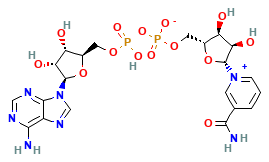
NAD+
Nicotinamide adenine dinucleotide. Cellular metabolism studies.
CAS 53-84-9
500mg vial · In stock
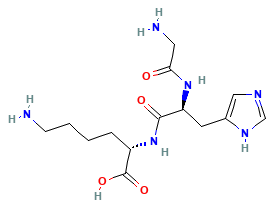
GHK-Cu
Copper tripeptide-1. Tissue regeneration studies.
CAS 49557-75-7
50mg vial · In stock
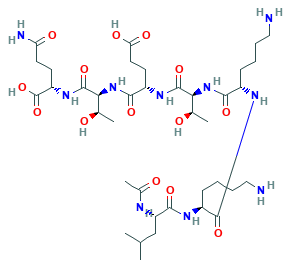
TB-500
Thymosin β4 fragment. Actin-binding domain active.
CAS 885340-08-9
5mg vial · In stock
For laboratory research use only