IGF-1 LR3: The Long R3 Recombinant Growth-Factor Analog
Research compounds for laboratory use only · not medical advice
IGF-1 LR3 (Long R3 IGF-1), the 83-residue recombinant analog with reduced IGFBP binding, and its research in IGF-1 receptor and growth-factor signaling.
IGF-1 LR3 is a redesign with one goal: make insulin-like growth factor-1 last longer by reducing its interaction with the proteins that bind and sequester it. The result is a recombinant analog studied as a comparator and a growth-factor signaling tool.
The molecule
IGF-1 LR3 (Long R3 IGF-1, C₄₀₀H₆₂₅N₁₁₁O₁₁₅S, ≈ 9118 g/mol) is an 83-residue recombinant analog of human IGF-1 with two modifications: an arginine in place of glutamate at position 3, and a 13-residue N-terminal extension. Both changes reduce binding to IGF-binding proteins (IGFBPs), which in native IGF-1 is what controls its free fraction.
What the research looks at
- IGF-1 receptor signaling — PI3K/Akt and MAPK pathway studies
- Cell proliferation and differentiation — where IGF-1 receptor activation is the question
- IGFBP-interaction research — the analog’s reduced binding makes it a tool for studying what free IGF-1 does without sequestration
It sits downstream of growth-hormone signaling — see the HGH 191aa page for the upstream half of that axis.
Handling notes
Lyophilized, reconstitute with bacteriostatic water; the reconstitution calculator handles the math. Store at −20°C lyophilized.
See IGF-1 LR3 for CAS, purity and full specifications.
For laboratory research use only. Not medical advice.
Last updated September 9, 2026
FAQ
Frequently asked questions
What is IGF-1 LR3?
IGF-1 LR3 (Long R3 IGF-1) is a recombinant 83-residue analog of human insulin-like growth factor-1 with an arginine-for-glutamate substitution at position 3 and a 13-residue N-terminal extension.
What does the modification do?
The Arg3 substitution and N-terminal extension reduce binding to IGF-binding proteins (IGFBPs), which extends the free half-life of the peptide in research systems.
What research uses IGF-1 LR3?
IGF-1 receptor and PI3K/Akt/MAPK signaling research, and cell-proliferation and differentiation models, where it is used as a comparator to native IGF-1.
Keep reading
Related articles
AOD-9604: The hGH Fragment 177-191 Lipolytic Peptide
AOD-9604, the synthetic analog of hGH fragment 177-191, and its research in lipolysis, fat metabolism and growth-hormone fragment pharmacology.
BPC-157 Dosage and Reconstitution Math: 5 mg Vial in the Lab
BPC-157 vial math — reconstituting a 5 mg lyophilized vial, mg to mL and U-100 unit conversions, and common research dose ranges.
CJC-1295 No DAC (Mod GRF 1-29): The Short-Acting GHRH Analog
CJC-1295 No DAC (Modified GRF 1-29), the tetrasubstituted GHRH analog with DPP-IV resistance, and its research in GH-secretagogue and pulsatility studies.
Laboratory tools
Put it into practice
From the catalog
Reference compounds
HGH 191aa
Recombinant human growth hormone. Full 191aa sequence.
CAS 12629-01-5
10IU vial · In stock
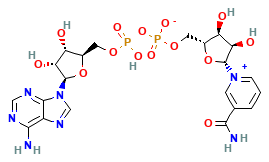
NAD+
Nicotinamide adenine dinucleotide. Cellular metabolism studies.
CAS 53-84-9
500mg vial · In stock
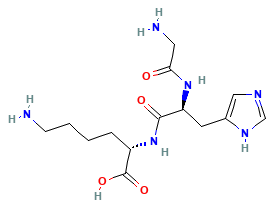
GHK-Cu
Copper tripeptide-1. Tissue regeneration studies.
CAS 49557-75-7
50mg vial · In stock
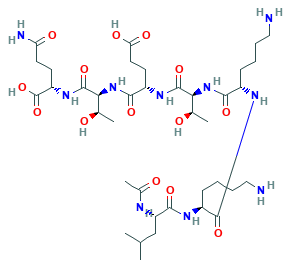
TB-500
Thymosin β4 fragment. Actin-binding domain active.
CAS 885340-08-9
5mg vial · In stock
For laboratory research use only