Masterol (Drostanolone Propionate): The Short-Acting DHT Depot
Research compounds for laboratory use only · not medical advice
What drostanolone propionate is, why it never aromatizes, its ~4.5-day propionate kinetics, and why its detection window is surprisingly long for a 'short' ester.
Drostanolone propionate has the oddest biography in the catalog: a molecule first synthesized in 1959 and later trialed against advanced breast cancer, later a fixture of sport, now mostly a residue-analysis target.
The molecule
Drostanolone is DHT with an extra 2α-methyl group — the same steric trick that blocks 5α-reduction in other “designer” androgens, here making the molecule non-aromatizable. Propionate is the short ester: ≈4.5 days half-life, ≈84% active fraction in our ester master reference, meaning it reaches steady-state and clears faster than the enanthate/undecylenate tier. Run any starting dose through the clearance calculator.
Research context
- 2α-methyl structure-activity studies — the methyl position is why drostanolone keeps androgenic signaling without estrogenic conversion, a comparator point in AR selectivity work.
- Metabolite-detection literature — the compound is a WADA-listed target; its metabolites are mapped in urine long after serum levels fall, a well-documented PK-vs-detection gap.
- Clinical history — synthesized at Syntex in 1959 and marketed as Masterol, with 1960s clinical trials in advanced breast cancer — which is why pharmacology texts still carry it.
Practical notes
100 mg/mL oil solution, 10 mL vials — no water math. CAS, purity and documentation on Masterol Propionate; mild-profile context in the Masteron guide.
References: Kicman A.T., “Pharmacology of Anabolic-Androgenic Steroids.” Handbook of Experimental Pharmacology, 2008.
For laboratory research use only. Not medical advice.
FAQ
Frequently asked questions
What is drostanolone propionate?
Drostanolone (Masterol) is the 2α-methylated DHT derivative once once licensed for advanced breast cancer; the propionate ester is the fast-clearing injectable form.
How long is the propionate half-life?
About 4.5 days in the intramuscular depot models used in our ester table — faster than enanthate, slower than acetate.
Does drostanolone aromatize?
No. The 2α-methyl DHT scaffold is not an aromatase substrate; drostanolone retains androgenic action with minimal estrogenic conversion.
Why do doping tests flag it for weeks?
Although the ester clears in days, drostanolone metabolites persist in urine at trace levels, giving long detection windows — the gap between pharmacokinetic clearance and metabolite detectability is a recurring theme in steroid analysis.
Keep reading
Related articles
Anavar (Oxandrolone): The Mild-Profile Oral
Oxandrolone's high anabolic-to-androgenic ratio, its ~9–12 hour half-life, and the 10 mg tablet math for research protocols.
Ester Half-Lives and Clearance: What Every Researcher Should Know
What an ester is, why half-life drives injection frequency, how first-order clearance works, and when a compound is effectively cleared.
All 11 Esters at a Glance: The Master Reference Table
Half-life, active fraction and clearance math for every ester in the Vyroval catalog — one table to bookmark, with links to the tools that model each one.
Laboratory tools
Put it into practice
From the catalog
Reference compounds
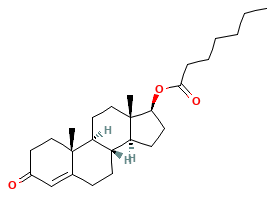
Testosterone Enanthate
Long-ester testosterone. 250mg/mL in USP-grade carrier oil.
CAS 315-37-7
10mL vial · In stock
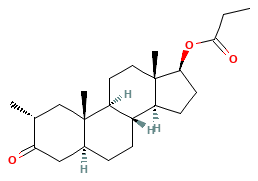
Drostanolone Propionate
DHT-derived propionate ester. Non-aromatizing standard.
CAS 521-12-0
10mL vial · In stock
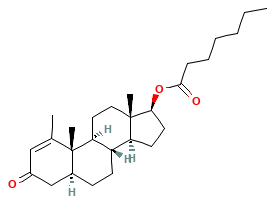
Methenolone Enanthate
Mild DHT-derived enanthate ester.
CAS 303-42-4
10mL vial · In stock
For laboratory research use only