Anavar (Oxandrolone): The Mild-Profile Oral
Research compounds for laboratory use only · not medical advice
Oxandrolone's high anabolic-to-androgenic ratio, its ~9–12 hour half-life, and the 10 mg tablet math for research protocols.
Anavar is the tablet researchers reach for when the word “mild” matters. Not weak — mild in the sense of a deliberately tilted anabolic-to-androgenic ratio.
The molecule
Oxandrolone (C₁₉H₃₀O₃, ≈ 306 g/mol) is a 17α-alkylated oral androgen — the alkylation keeps it alive through first-pass metabolism, and the half-life lands around 9–12 hours. That’s the oral’s tradeoff: it works without injection, but daily or split dosing is required because it clears in hours.
The “mild” reputation
Anavar’s research references center on its high anabolic-to-androgenic ratio — more anabolic signal relative to androgenic side effects than most compounds in its class. That’s why it shows up in protocols that want protein-synthesis work without a strong androgenic footprint. The oral androgens comparison puts it next to Winstrol and Dianabol for a direct look.
Tablet math
Anavar ships as 10 mg precision-dosed tablets — no reconstitution, no syringe units. When a research method calls for molar concentrations, the molecular weight calculator does the conversion. Room temperature storage, ethanol/oil soluble.
See Anavar for CAS, purity and full specifications, and the ester master reference for where the orals sit in the kinetic table.
For laboratory research use only. Not medical advice.
Last updated September 9, 2026
FAQ
Frequently asked questions
What is oxandrolone?
Oxandrolone (Anavar) is a 17α-alkylated oral androgen with a high anabolic-to-androgenic ratio, supplied as 10 mg precision-dosed tablets.
How long is its half-life?
Around 9–12 hours — oral androgens clear in hours, not days, which is why protocols dose daily or split the tablet.
Why is it called 'mild'?
Its androgenic profile is low relative to its anabolic activity, which is why research references it when protocols want to minimize androgenic signal while maintaining protein-synthesis work.
Keep reading
Related articles
Ester Half-Lives and Clearance: What Every Researcher Should Know
What an ester is, why half-life drives injection frequency, how first-order clearance works, and when a compound is effectively cleared.
All 11 Esters at a Glance: The Master Reference Table
Half-life, active fraction and clearance math for every ester in the Vyroval catalog — one table to bookmark, with links to the tools that model each one.
Nandrolone Decanoate: The Long-Tail Ester
A 15-day half-life means Deca clears slowly — weeks, not days. The math, the clearance timeline, and why long esters dominate protocol planning.
Laboratory tools
Put it into practice
From the catalog
Reference compounds
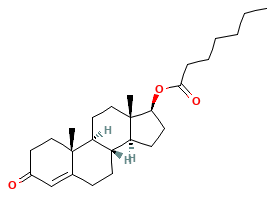
Testosterone Enanthate
Long-ester testosterone. 250mg/mL in USP-grade carrier oil.
CAS 315-37-7
10mL vial · In stock
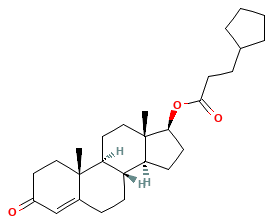
Testosterone Cypionate
Cyclopentyl ester testosterone. Extended half-life profile.
CAS 58-20-8
10mL vial · In stock
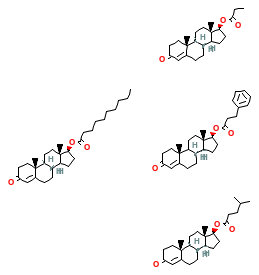
Sustanon 250
Four-ester testosterone blend. Extended release profile.
CAS 68924-89-0
10mL vial · In stock
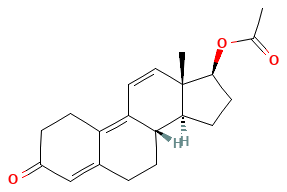
Trenbolone Acetate
19-nor anabolic compound. High receptor binding affinity.
CAS 10161-34-9
10mL vial · In stock
For laboratory research use only